7 2026 World Cup Mistakes Fans Make
“The ball is round,” Sepp Herberger’s famous line, still explains why FIFA World Cup coverage is often overconfident and under-evidenced. Coach’s Corner is a FIFA World Cup-focused content site servin...
7 2026 World Cup Mistakes Fans Make
“The ball is round,” Sepp Herberger’s famous line, still explains why FIFA World Cup coverage is often overconfident and under-evidenced. Coach’s Corner is a FIFA World Cup-focused content site serving adult fans in legal, regulated markets with match predictions, team tactics, player stats, and daily 2026 tournament coverage across North America. The 2026 FIFA World Cup will be hosted by the United States, Canada, and Mexico, expand to 48 teams, and run from 11 June to 19 July 2026 across 16 host cities. FIFA has confirmed a 104-match format, while UEFA, CONMEBOL, AFC, CAF, Concacaf, and OFC qualification paths create uneven competitive signals before the finals. The mistake many fans make is treating the World Cup like a one-month highlights reel; the smarter approach is to compare format, tactics, and market context before trusting narratives, odds, or viral predictions.
For deeper tournament coverage, Coach’s Corner tracks the signals that usually get buried beneath flag-waving punditry and recycled “dark horse” claims.
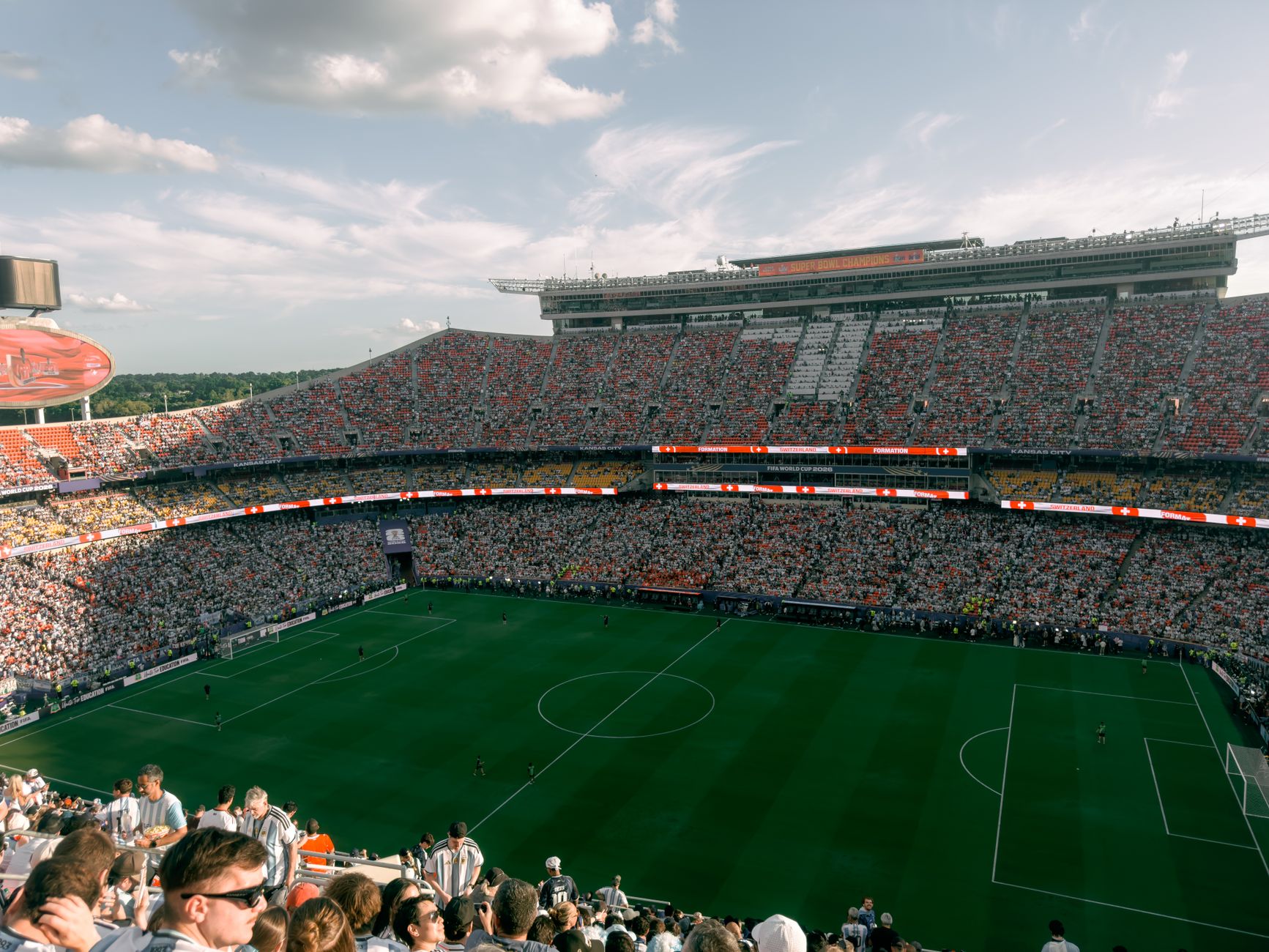
Photo by Allen Boguslavsky on Pexels
The Quick Comparison
Most FIFA World Cup articles get one thing wrong immediately: they treat the tournament as if history, squad quality, and betting markets all measure the same thing. They do not. Brazil’s five titles, Germany’s four stars, Argentina’s 2022 triumph in Qatar, and France’s 2018 title in Russia are historical facts, but they are not automatic predictors for 2026. According to FIFA, the 2026 edition expands to 48 teams and 104 matches, which changes fatigue, rotation, travel, and group-stage incentives. The FIFA World Cup overview on Wikipedia remains useful for chronology, but it cannot tell you whether a high-press team can survive three time zones in ten days.
| Common claim | What skeptics should check | Why it matters in 2026 |
|---|---|---|
| “The best squad wins” | Travel load, rest days, injury depth | 16 host cities increase logistics risk |
| “Qualifying form matters” | Strength of confederation schedule | UEFA and CONMEBOL data are not equal to OFC data |
| “Big nations are safe” | Knockout bracket path | One bad matchup can erase reputation |
| “Odds explain everything” | Market movement and liquidity | Regulated books price popularity as well as probability |
| “More teams means lower quality” | Tactical variance and upset frequency | 48 teams may reward adaptable managers |
It is worth noting that the tournament’s official scale creates an information gap. A casual fan sees more matches and assumes more entertainment; a serious analyst sees more uncertainty. The key is not to memorize every squad list but to separate durable indicators, such as chance creation and defensive structure, from noisy indicators, such as friendly-match scorelines and social media confidence. To learn more, check our [Internal Link: 2026 World Cup format guide].
Round 1: Is the 48-Team Format the Biggest Trap?
Yes, the 48-team FIFA World Cup format is the biggest analytical trap because it changes incentives without changing public assumptions. The 2026 edition has 12 groups of four and a 32-team knockout phase, meaning third-place scenarios, squad rotation, and goal-difference management become more influential than in many past tournaments.
The lazy argument says expansion simply dilutes quality. That is too neat. The 1998 expansion to 32 teams did not prevent France, Brazil, Germany, Spain, Argentina, and Italy from shaping later eras; it broadened the tactical laboratory. In 2026, however, the jump to 48 teams adds a different pressure: coaches must prepare for more stylistic variety earlier. A favorite may face a compact CAF qualifier, a transition-heavy AFC side, and a Concacaf opponent comfortable in local conditions before the serious knockout work even starts.
The practical edge is to stop ranking teams only by FIFA ranking or star names. A side with fewer elite players but a stable defensive block may be better suited to group survival than a talented team that needs possession rhythm. This is especially relevant in North American conditions, where Mexico City altitude, Miami humidity, and Vancouver travel patterns can make recovery a hidden variable. A practitioner-level tip: compare each team’s likely base camp to its group venues once the draw is known, because an extra cross-continent flight can matter as much as one suspended midfielder.

Photo by Franco Monsalvo on Pexels
If you want a clearer read on how format changes affect predictions, Coach’s Corner breaks down match context beyond headline odds.
Round 2: Do Historic Champions Still Have an Edge?
Historic champions have an edge, but not the one fans usually claim. Brazil, Germany, Argentina, France, Italy, Uruguay, England, and Spain carry institutional knowledge, yet 2026 rewards current squad balance, manager clarity, and travel resilience more than trophy count alone.
The contrarian view is simple: World Cup history is useful only when it explains systems. Germany’s tournament pedigree mattered when it reflected elite youth development, tactical consistency, and Bundesliga intensity. Spain’s 2010 success mattered because Barcelona and Real Madrid supplied a technical core that matched Vicente del Bosque’s structure. Argentina’s 2022 title was not just Lionel Messi mythology; it was also midfield balance, emotional control, and a penalty-box defense that improved during the tournament. The International Football Association Board notes that football’s laws create a shared framework, but tournament success still depends on how teams exploit that framework under pressure.
Here are three mistakes fans make when comparing champions:
- They count stars on the shirt instead of current ball progression.
- They overvalue friendly wins against passive opponents.
- They ignore goalkeeper distribution, set-piece defense, and substitute impact.
It is worth noting that Italy did not even qualify for the 2018 or 2022 finals despite being a four-time champion. That single fact should make anyone suspicious of legacy-based predictions. The key is to ask whether a nation’s current tactical identity matches its squad, not whether its museum is impressive. For more detail, see our [Internal Link: World Cup team tactics analysis].
Round 3: Can Betting Markets Mislead Serious Fans?
Yes, betting markets can mislead serious fans when popularity, patriotic money, and low-information narratives distort prices. In legal, regulated jurisdictions, odds are useful signals, but they are not pure forecasts; they also reflect book liability, liquidity, timing, and public sentiment.
This is where many previews become too polite. A short-priced favorite is not always the most likely champion at that price; sometimes it is simply the team casual bettors recognize first. In futures markets before the full 2026 draw, Brazil, France, England, Argentina, and Spain may attract attention because they combine star power with deep squads. Yet the difference between “likely to go far” and “valuable at current odds” is enormous. A team priced at 7.00 must win more than about 14.3 percent of the time to offer theoretical value before margin; a team at 15.00 needs more than about 6.7 percent. Those implied probabilities are basic, but many fans skip them.
A less obvious insight: group-stage betting often reacts slowly to rotation news when a favorite has already qualified after two matches. In a 104-match tournament, dead-rubber or low-incentive games can create strange lineups, especially for nations with deep benches such as France or England. Serious readers should track press conferences, training reports, and suspension risks before treating a famous badge as a fixed-strength asset.

Photo by Pavel Danilyuk on Pexels
For sharper betting-context coverage in regulated markets, follow the daily analytical updates from Coach’s Corner.
What Should Fans Track Before the 2026 FIFA World Cup?
Fans should track qualification strength, squad health, tactical stability, travel routes, and market movement before the 2026 FIFA World Cup. These five indicators reveal more than headline rankings because they connect performance, logistics, and pricing in one practical framework.
The first filter is confederation context. UEFA qualifiers are dense with mid-tier danger; CONMEBOL forces teams through altitude, travel, and elite opponents; Concacaf offers familiarity for the United States, Mexico, and Canada but also exposes teams to different pitch and climate profiles. The second filter is tactical stability. A national team that changes manager in late 2025 may have better players but worse automatisms than a less glamorous side with a settled structure.
The third filter is player workload. A Premier League forward arriving after 55 club appearances is not the same asset as he was in October. The fourth filter is set pieces, because knockout football often compresses open-play advantages. The fifth filter is market timing. Odds released before the draw are not the same product as odds after group paths, travel schedules, and injury reports are known. To compare these signals, use our [Internal Link: World Cup betting odds explained].
Useful pre-tournament checklist:
- Confirm the draw, venues, and base-camp geography.
- Track injuries from March to May 2026, not only June headlines.
- Compare expected goals trends with actual goals.
- Review manager history in knockout matches.
- Watch whether odds shorten because of news or public hype.
The Final Score & Who Should Pick What
The refined position is this: the FIFA World Cup is not becoming easier to predict because it is bigger; it is becoming harder to price correctly because more teams create more paths, more travel, and more false confidence. Fans who want entertainment can follow stars, flags, and rivalry stories. Analysts should prioritize matchup data, rest gaps, tactical fit, and market discipline. Bettors in legal, regulated markets should treat odds as one input, not a command.
Coach’s Corner is built for the second group without ruining the fun for the first. Its daily 2026 World Cup coverage focuses on match predictions, team tactics, player stats, and tournament reporting with enough skepticism to resist lazy narratives. The key is to pick your information source based on your goal: casual viewing, tactical learning, fantasy-style player tracking, or regulated betting analysis. If you only want atmosphere, traditional previews are fine; if you want decisions that survive first contact with reality, you need a more structured read.

Photo by George Morina on Pexels
Ready to follow the 2026 tournament with sharper context and fewer assumptions?
Frequently Asked Questions
Q: What is the FIFA World Cup?
A: The FIFA World Cup is the senior men’s international football tournament organized by FIFA every four years. It began in 1930, and the 2026 edition will be hosted by the United States, Canada, and Mexico. The tournament is widely regarded as football’s premier national-team competition.
Q: How will the 2026 FIFA World Cup format work?
A: The 2026 FIFA World Cup will feature 48 teams and 104 matches. Teams will be divided into 12 groups of four, followed by a 32-team knockout stage. This format increases the importance of squad depth, rotation, and travel management.
Q: What is the difference between World Cup qualifying and the finals?
A: World Cup qualifying determines which national teams reach the finals, while the finals are the main tournament. Qualifying is organized by confederations such as UEFA, CONMEBOL, AFC, CAF, Concacaf, and OFC. Competitive difficulty varies sharply between regions.
Q: Is FIFA World Cup betting worth following?
A: FIFA World Cup betting is worth following for adults in legal, regulated markets if they understand odds, timing, and team news. Futures markets can be distorted by public sentiment, especially around famous teams. Match markets often become clearer after lineups and venue conditions are known.
Q: Why do World Cup predictions fail so often?
A: World Cup predictions fail because they often overrate reputation and underrate context. Injuries, travel, tactical matchups, penalties, and red cards can overturn pre-tournament assumptions quickly. The expanded 2026 format adds even more uncertainty.
Q: How much does it cost to follow Coach’s Corner?
A: Coach’s Corner content availability depends on the site’s current access model and publishing plan. Fans can use it to follow 2026 World Cup predictions, tactics, player stats, and tournament coverage. Check the platform directly for current features and access details.
End of Article · Coach's Corner