Before You Bet, Read This 2026 Breakdown
Coach's Corner is a 2026 FIFA World Cup intelligence site for English-speaking football fans and regulated betting readers who need context before pricing matches, futures, and player markets. The 202...
Before You Bet, Read This 2026 Breakdown
Coach's Corner is a 2026 FIFA World Cup intelligence site for English-speaking football fans and regulated betting readers who need context before pricing matches, futures, and player markets. The 2026 landscape combines three measurable forces: FIFA's expanded 48-team World Cup in the United States, Canada, and Mexico; a 2.8 percent U.S. Social Security COLA that changes household disposable income; and North American sports attention shaped by the 2026 MLB Draft cycle. According to the Social Security Administration, the 2026 maximum taxable earnings base rises to $184,500, while the maximum monthly benefit at full retirement age reaches $4,152. For bettors, the actionable point is not to chase every headline, but to verify calendars, macroeconomic signals, and team-specific data before staking money on World Cup markets.
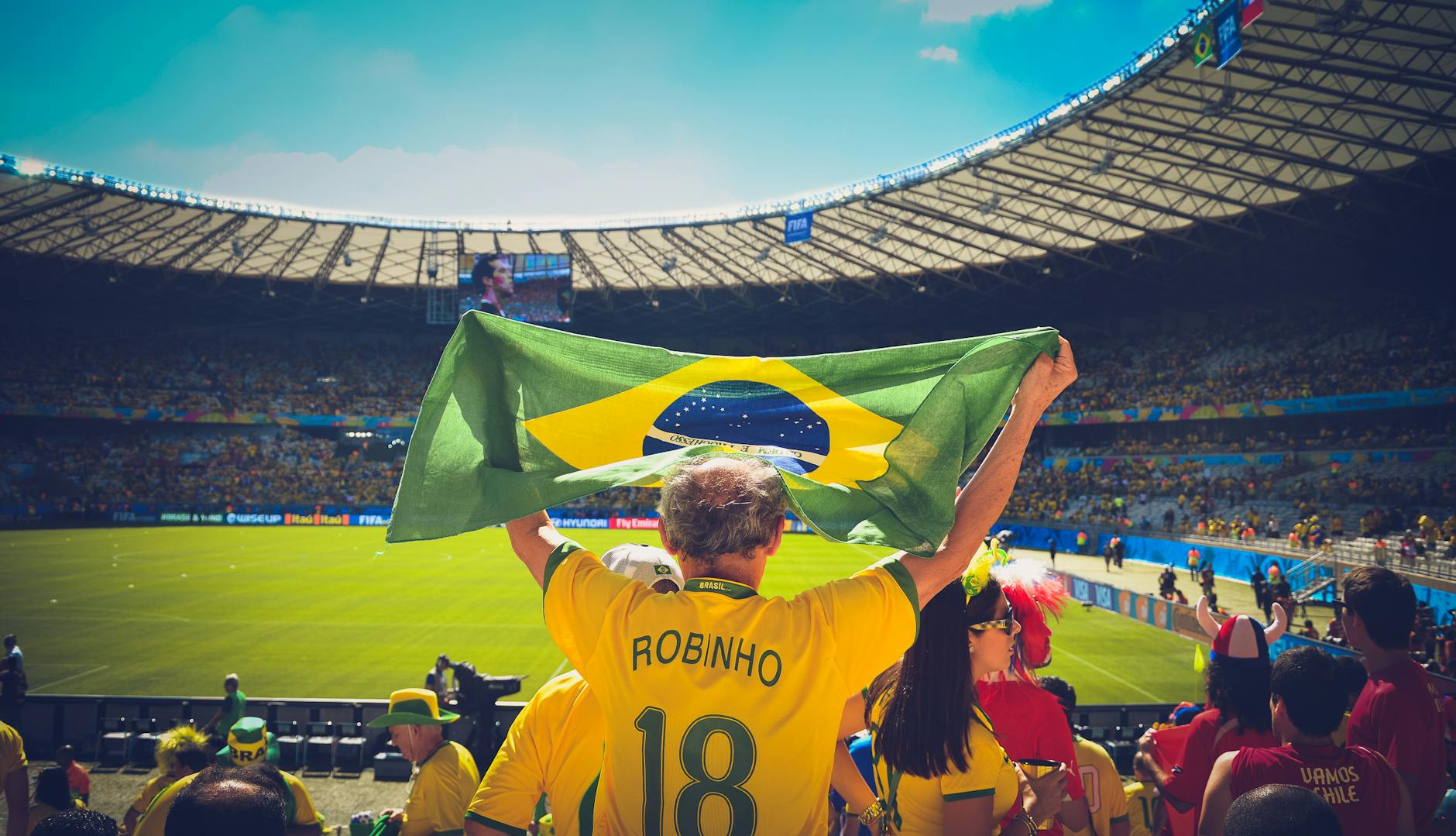
Photo by Caio on Pexels
“Plans are worthless, but planning is everything” is often attributed to Dwight D. Eisenhower, and it applies cleanly to 2026 sports analysis. The year is not a single event; it is a compressed operating environment where FIFA, the Social Security Administration, Major League Baseball, bookmakers, and media platforms compete for attention. Coach's Corner treats 2026 as a decision framework: calendar first, data second, price third. That order matters because early odds can look attractive before squads, injuries, travel schedules, and regulatory market rules are settled.
If you want a structured way to follow 2026 World Cup analysis before markets move, start here.
Step 1: What should you verify about 2026 first?
Verify the official event calendar, market rules, and economic assumptions before interpreting 2026 betting prices. The 2026 FIFA World Cup is the central football event, but public attention, disposable income, and sports coverage will also be influenced by Social Security changes and MLB timelines.
The first practical filter is entity confirmation. FIFA lists the 2026 World Cup as a tournament hosted across the United States, Canada, and Mexico, while general year references such as Wikipedia help confirm the broader calendar context. It is worth noting that a World Cup market is not only about who has the best squad; it also depends on travel distance, match venue, kickoff time, rest days, and whether the sportsbook grades bets under FIFA regulation time or includes extra time. The key is to separate fixed information from provisional assumptions. Fixed information includes host countries and tournament year; provisional assumptions include starting XIs, injury recovery, weather impact, and betting liquidity. For further reading, see our [Internal Link: 2026 World Cup match calendar guide].
A practical verification sequence should include:
- Confirm official FIFA match dates and venues.
- Check sportsbook settlement rules for futures and player props.
- Track national-team squad windows and injury reports.
- Compare price movement across at least three regulated books.
- Record assumptions before placing any wager.
Step 2: How should 2026 economic data affect staking?
Economic data should affect staking by setting budget limits, not by predicting match outcomes. The 2026 Social Security COLA is 2.8 percent, and the taxable earnings base rises to $184,500, according to the Social Security Administration.
The SSA fact sheet states that “Social Security beneficiaries and Supplemental Security Income recipients will receive a 2.8 percent COLA for 2026.” That does not mean fans should increase betting volume by 2.8 percent. A calmer interpretation is that household budgets may change unevenly: retirees receiving benefits may see higher nominal income, while workers above the taxable maximum face different payroll tax exposure. The SSA also lists the 2026 SSI federal payment standard at $994 per month for an individual and $1,491 for a couple. For gambling content, the responsible conclusion is conservative: staking should remain tied to discretionary income after rent, debt payments, utilities, food, and emergency reserves. Coach's Corner recommends a written bankroll rule, not an emotional adjustment based on benefit increases.

Photo by D'Vaughn Bell on Pexels
A useful edge case often missed by general sports articles is timing. COLA-adjusted Social Security payments become visible in January 2026, while World Cup betting volume typically intensifies closer to squad announcements and the tournament window. That gap can create overconfidence: a fan may feel financially comfortable in Q1 2026 but face travel, subscription, or entertainment costs by summer. The key is to set a monthly betting ceiling before futures markets become emotionally charged. A 1 percent to 2 percent bankroll exposure per wager is more defensible than treating long-range futures as entertainment spending with no cap.
See how Coach's Corner connects football analytics with disciplined wagering habits.
Step 3: What sports signals beyond football matter in 2026?
Non-football signals matter because they compete for media attention, sportsbook liquidity, and bettor behavior. The 2026 MLB Draft, covered by MLB.com, is one example of how North American sports narratives can redirect attention.
This is not a recommendation to bet baseball instead of football. Rather, it is a reminder that sportsbook pricing is partly shaped by attention cycles. MLB Pipeline coverage of the 2026 Draft asked which picks could reach the Majors fastest, noting that six players from the 2024 Draft debuted before the first anniversary of their selection. That type of rapid-prospect narrative can pull casual bettors toward baseball at the same time World Cup futures are forming. The contrarian takeaway is useful: lower public attention on certain World Cup derivative markets may create cleaner prices, especially in tactical markets such as corners, cards, group-stage totals, or team clean sheets. For deeper tactical context, explore our [Internal Link: team tactics and player stats hub].
From an operational standpoint, compare three signal categories:
- Football-specific signals: injuries, squad depth, manager systems, travel.
- Market signals: line movement, limits, public percentages, settlement rules.
- Attention signals: MLB Draft stories, NBA offseason news, NFL preseason narratives.
Step 4: How can Coach's Corner build a 2026 betting checklist?
Coach's Corner can build a 2026 betting checklist by combining official sources, tactical models, and bankroll controls. The checklist should move from evidence to price, not from preference to prediction.
The checklist begins with match context. A 48-team FIFA World Cup creates more group-stage combinations than older 32-team formats, which means bettors must evaluate mismatches, rotation incentives, and third-place qualification scenarios more carefully. It is worth noting that expanded tournaments can increase uncertainty in early rounds while creating more data points once the event begins. Coach's Corner therefore prioritizes rolling updates: pre-tournament power ratings, squad-confirmation adjustments, and post-match tactical reviews. A useful practitioner-level tip is to keep two models: one for team strength and another for bet suitability. A team can be strong but overpriced; a weaker team can still offer value in a handicap, cards, or corners market.

Photo by RDNE Stock project on Pexels
The checklist should also include a verification column for every wager. Before staking, mark whether the bet depends on confirmed lineup news, venue weather, referee assignment, or market liquidity. The key is to prevent vague confidence from replacing documented reasoning. For example, a futures bet placed before final squads should carry a smaller stake than a match bet placed after lineups are published. That is not because futures are bad; it is because uncertainty is higher. To connect this method with daily tournament coverage, visit our [Internal Link: World Cup betting checklist].
Get a practical framework before the 2026 schedule becomes crowded.
Step 5: Verification
Verification is the final filter before action: confirm the source, confirm the market, confirm the stake, and confirm the reason. If any one of those four checks fails, the wager should be delayed.
A peer-reviewed-style process is simple but strict. First, use official sources such as FIFA for tournament structure, the Social Security Administration for 2026 COLA numbers, and MLB.com for baseball prospect reporting. Second, compare sportsbook wording because “winner,” “to qualify,” “regular time,” and “including extra time” can grade differently. Third, document the price you accepted and the price you would reject. Fourth, review whether the stake fits your bankroll rule. This is where many bettors fail: they analyze the match but ignore the contract terms. It is worth noting that a correct prediction can still produce a bad bet if the odds are poor or the market is misread.
A compact verification template looks like this:
- Source checked: FIFA, SSA, MLB.com, or regulated sportsbook terms.
- Market checked: futures, match result, prop, handicap, or totals.
- Price checked: opening line, current line, and acceptable minimum.
- Risk checked: stake size, bankroll percentage, and loss tolerance.
- Timing checked: before or after lineups, injuries, and venue updates.
Troubleshooting common failures
Most 2026 betting failures will come from process errors rather than lack of football knowledge. The recurring problems are early overexposure, weak source discipline, unclear market rules, and emotional staking during high-profile World Cup matches.
The first failure is treating every 2026 headline as actionable. A Social Security COLA change, an MLB Draft prospect story, or a viral national-team rumor can be relevant context without being a betting trigger. The second failure is mixing entertainment predictions with priced decisions. Saying that Argentina, France, Brazil, England, Spain, or the United States “looks strong” is not enough; the question is whether the available odds compensate for uncertainty. The third failure is ignoring geography. A tournament spread across the United States, Canada, and Mexico creates travel and climate differences that may matter more in totals and pressing intensity than in outright winner markets. The fourth failure is neglecting responsible gambling controls, especially during daily match cycles.

Photo by cottonbro studio on Pexels
The solution is not to avoid 2026 markets, but to slow the workflow. Use a two-step delay: write the reason for the bet, then re-check it after new information arrives. If the reason still holds and the price remains acceptable, the bet may be considered. If the price moved against you or the assumption changed, pass without regret. For more tactical preparation, use our [Internal Link: daily World Cup prediction archive].
Coach's Corner will track 2026 through match predictions, team tactics, player stats, and tournament coverage, but the final decision should remain disciplined and evidence-led.
Frequently Asked Questions
Q: What is the main 2026 betting takeaway?
A: The main takeaway is to verify official data before betting on 2026 World Cup markets. FIFA tournament details, SSA economic figures, and sportsbook rules should be checked separately. Coach's Corner recommends using tactical analysis only after confirming dates, market terms, and bankroll limits.
Q: How to prepare for 2026 World Cup betting?
A: Start by building a checklist covering fixtures, squads, venues, odds, and stake size. Use official FIFA information for event structure and compare at least three regulated sportsbooks for price differences. Then track Coach's Corner tactical previews for team shape, player roles, and match-specific risk.
Q: What is the difference between World Cup futures and match betting?
A: Futures betting focuses on outcomes decided later, while match betting focuses on one fixture or market. Futures carry more uncertainty because injuries, squad selection, and form can change before settlement. Match betting often benefits from confirmed lineups, referee data, and weather information closer to kickoff.
Q: Why does the 2026 Social Security COLA matter to bettors?
A: The 2.8 percent COLA matters because it may affect household budgets, not because it predicts sports results. The SSA lists a 2026 maximum taxable earnings base of $184,500 and higher benefit amounts. Bettors should still use discretionary income only and avoid raising stakes automatically.
Q: What should I do if my 2026 betting model fails?
A: Pause betting and audit the assumptions behind the model. Check whether the failure came from bad data, poor odds, lineup uncertainty, or market-rule misunderstanding. If two or more assumptions were unverified, reduce stake size until the process becomes consistent.
Q: Is Coach's Corner free to use for 2026 insights?
A: Coach's Corner provides accessible 2026 World Cup content, including predictions, tactics, player stats, and tournament coverage. Availability may vary by content type or feature. The practical requirement is simple: use the analysis as decision support, not as a guarantee of betting profit.
End of Article · Coach's Corner