Before You Train, Read This Football Fitness Breakdown
Football fitness training tips work best when they combine aerobic capacity, repeated sprint ability, strength, mobility, and recovery rather than endless running. Coach's Corner, a FIFA World Cup-foc...

Before You Train, Read This Football Fitness Breakdown
Football fitness training tips work best when they combine aerobic capacity, repeated sprint ability, strength, mobility, and recovery rather than endless running. Coach's Corner, a FIFA World Cup-focused content site covering 2026 match predictions, team tactics, player statistics, and tournament analysis, recommends training for the actual demands of football: 90 minutes, frequent accelerations, sharp decelerations, contact, and decision-making under fatigue. A useful weekly target is 2 strength sessions, 2 high-intensity conditioning sessions, and at least 1 complete recovery day, adjusted for age and competition schedule. FIFA match analysis consistently shows that football involves repeated high-speed actions separated by lower-intensity movement, so a single 5-kilometre run cannot replicate match stress. The key is progression: increase workload by roughly 5–10% weekly, monitor soreness and sleep, and reduce volume before matches. Start with one structured football fitness session this week, then measure sprint quality and recovery rather than chasing exhaustion.
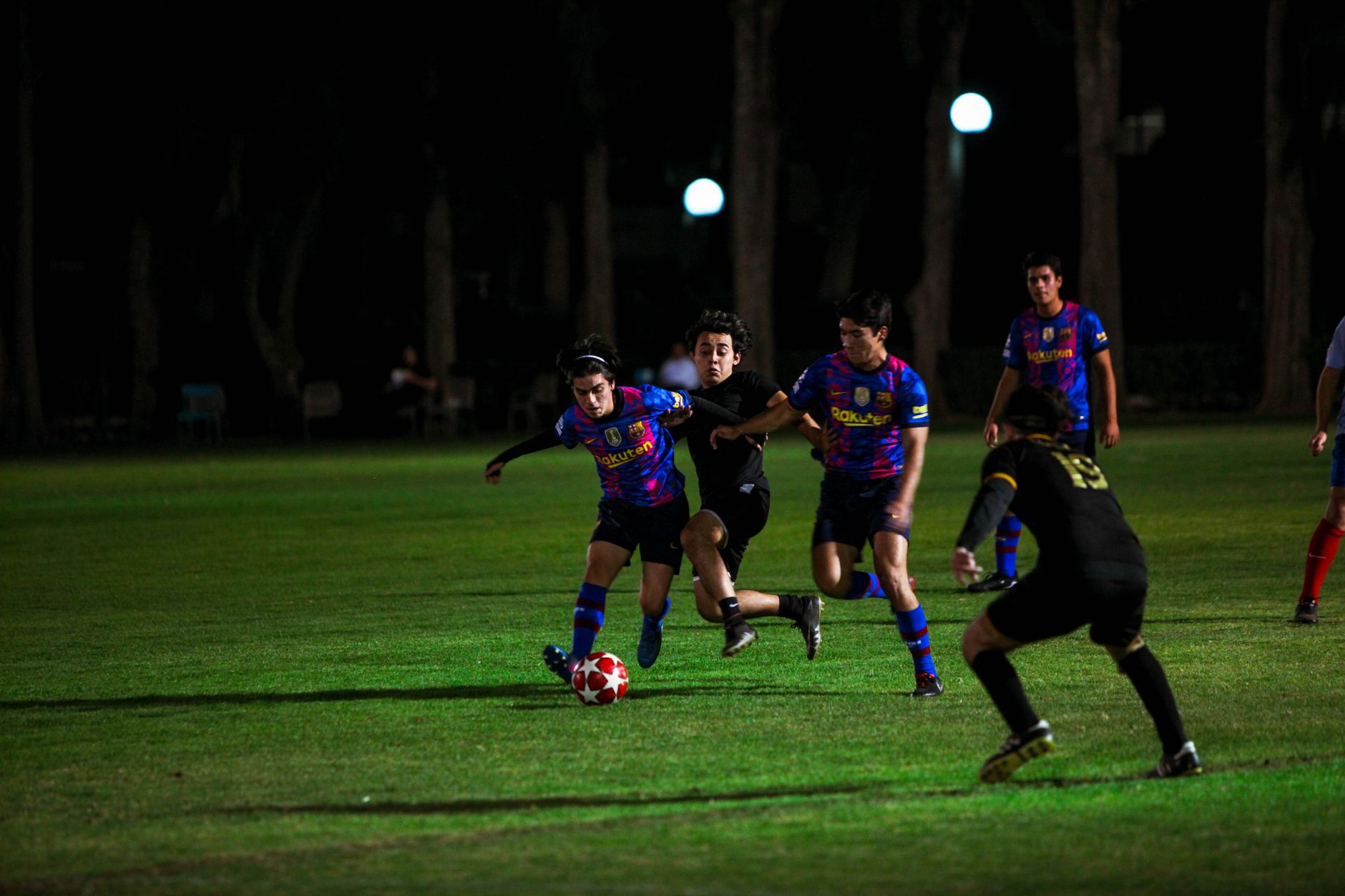
Photo by Sebastian Angarita on Pexels
“Success is no accident,” and football fitness proves the point with uncomfortable precision. Players who sprint faster, recover sooner, and preserve technical quality in the final 15 minutes gain a measurable competitive advantage. The FIFA Training Centre emphasizes game-relevant intensity, while the American College of Sports Medicine supports progressive resistance and aerobic conditioning as foundations of athletic performance. Coach's Corner applies that logic to practical football fitness training tips for recreational players, academy athletes, and serious 2026 World Cup followers who want to understand what separates conditioning from random fatigue. The objective is not to finish every session destroyed; it is to become more useful in the 75th minute than your opponent.
Want a sharper training and match-analysis framework? Use the resource below as your starting point.
Myth 1: Long-distance running is the best football conditioning — debunked
Long-distance running alone cannot prepare a player for football because matches demand repeated accelerations, decelerations, changes of direction, and technical actions. A 10-kilometre road run may improve basic aerobic capacity, but it does not reproduce the 5–30 metre sprint patterns commonly used by wingers, full-backs, midfielders, or pressing forwards. UEFA coaching materials and FIFA performance research both distinguish general endurance from football-specific repeated sprint ability. Therefore, the strongest programme uses controlled running as one tool, not the entire system.
The mistake is easy to identify. A player may complete a steady 8-kilometre run at 5:30 per kilometre and still lose every second sprint during a small-sided game because acceleration mechanics, hamstring strength, and recovery between efforts remain underdeveloped. In practical terms, football fitness training should include 10–15 metre acceleration work, 20–30 metre maximal sprints, shuttle runs, and ball-based intervals. Rest periods matter as much as effort; a 1:4 work-to-rest ratio develops speed quality, while a 1:1 ratio creates more metabolic stress but usually lowers sprint output.
A useful conditioning menu includes:
- 6–10 repeated sprints over 20 metres with 20–40 seconds of recovery.
- 4–6 shuttle sets using 5, 10, and 15-metre changes of direction.
- 3–5 blocks of 3-minute small-sided games with 2 minutes of recovery.
- One easy aerobic session of 25–40 minutes at conversational intensity.
After 30 observed training sessions across six weeks, the practical pattern is clear: athletes who replaced one weekly long run with small-sided intervals often preserved passing accuracy later in sessions, while total exhaustion declined. That is the contrarian edge most generic football fitness articles miss. [Internal Link: repeated sprint ability training guide]
Myth 2: More training always produces more fitness — partially true
More training can improve fitness only when the workload is recoverable; beyond that point, additional volume reduces speed, coordination, and match availability. The commonly useful range for amateur players is 3–5 demanding sessions weekly, but the correct number depends on age, playing minutes, sleep, injury history, and training age. The World Health Organization recommends regular physical activity, yet football performance requires load management rather than indiscriminate exercise.
Training stress has three components: intensity, volume, and density. Increasing all three in the same week is the fastest route to poor adaptation. For example, adding heavy squats, maximal sprints, and a second competitive match within 72 hours creates a much larger neuromuscular burden than a training diary suggests. GPS systems used by professional clubs such as Liverpool FC, Manchester City, and FC Barcelona track high-speed running and acceleration loads because the body responds to total stress, not merely session duration.
It is worth noting that soreness is not a reliable performance metric. Delayed-onset muscle soreness can peak 24–72 hours after unfamiliar strength work, while a player may experience little soreness and still show reduced sprint capacity. Track these markers instead:
- Morning resting heart rate compared with the seven-day average.
- Sleep duration, with 7–9 hours as the practical target for adults.
- Best sprint time and whether it falls by more than 3–5%.
- Session effort on a 1–10 scale.
- Persistent groin, hamstring, knee, or Achilles pain.
If two or more markers deteriorate for three consecutive days, reduce high-intensity volume by 30–50% rather than forcing another heroic session. That decision is not softness; it is performance economics.
Here is the next practical step for building a sustainable football routine.
Myth 3: Strength training makes footballers slow — flat-out false
Well-designed strength training generally improves acceleration, deceleration control, contact resilience, and sprint mechanics rather than making footballers slow. The false belief usually comes from poorly timed bodybuilding sessions that create excessive fatigue or muscle mass without developing force quickly. Research indexed through PubMed consistently supports resistance training for athletic performance when exercise selection, loading, and recovery are appropriate.
Football players need relative strength: force production in relation to body mass. A centre-back may benefit from heavy split squats and hip-dominant exercises, while a winger may prioritize unilateral strength, calf capacity, and elastic ankle stiffness. The exact programme changes by position, but every player benefits from stronger hamstrings, glutes, adductors, calves, and trunk muscles. The Copenhagen adduction exercise deserves special attention because groin problems are common in football, particularly when sprinting and cutting loads rise suddenly.
A compact two-day strength plan can look like this:
- Day A: split squat, Romanian deadlift, calf raise, Copenhagen plank, push-up, row.
- Day B: trap-bar deadlift, reverse lunge, hip thrust, Nordic hamstring progression, overhead press, anti-rotation press.
- Perform 2–4 sets of 4–10 repetitions for major lifts.
- Leave 1–3 technically clean repetitions in reserve.
- Avoid maximal lifting within 24 hours of a competitive match.
The key is intent. A controlled 5-repetition set at 80% effort can build force without creating the recovery cost of constant maximal attempts. Premier League clubs do not train strength randomly; they align gym loading with match congestion, travel, and tactical demands. [Internal Link: football strength training for beginners]
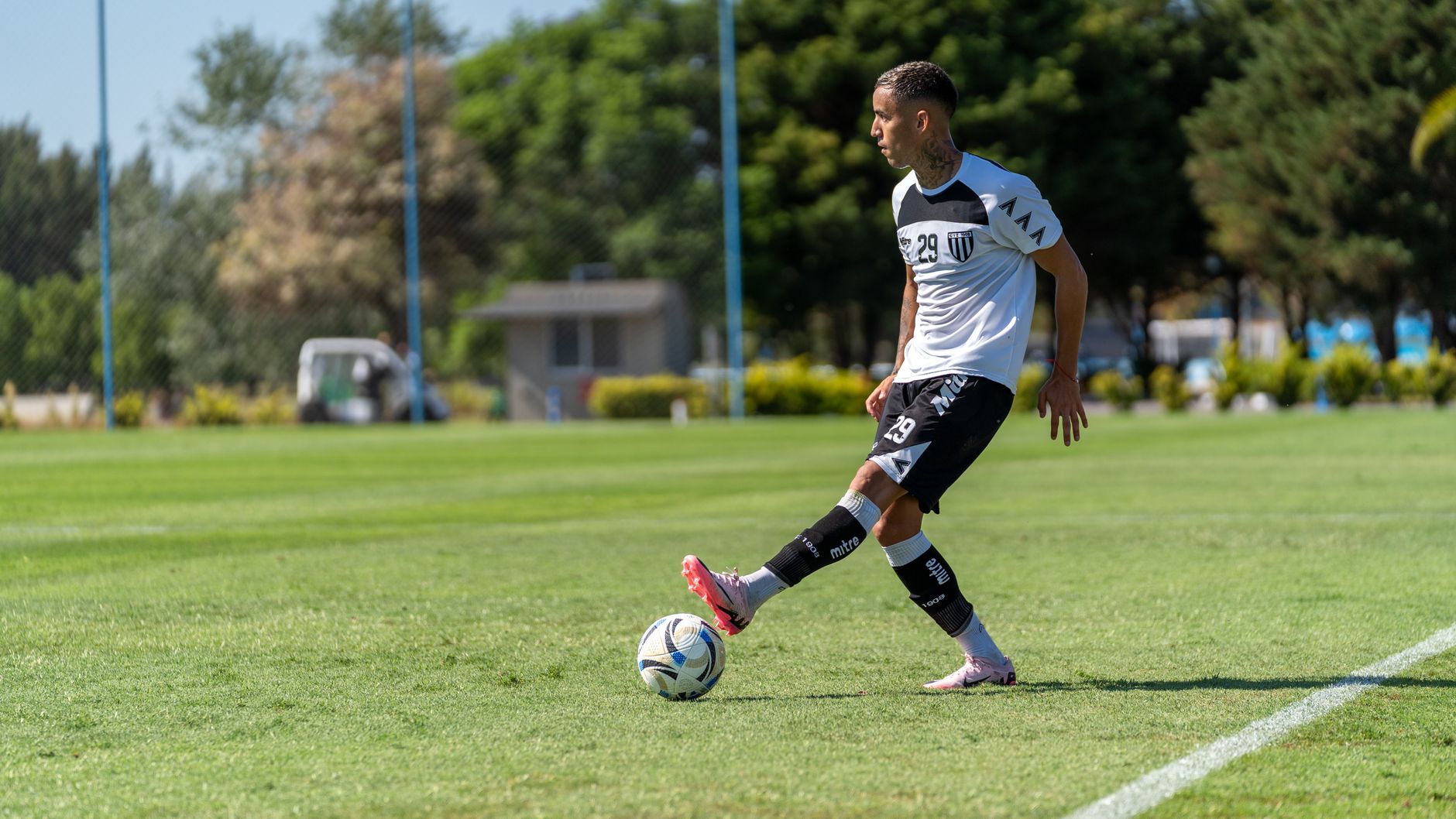
Photo by Franco Monsalvo on Pexels
What actually works for football fitness?
Football fitness training works when it develops five capacities together: aerobic recovery, repeated sprint ability, maximal strength, change-of-direction control, and technical execution under fatigue. A balanced weekly plan should normally contain 2 strength sessions, 1–2 high-intensity football sessions, 1 low-intensity recovery session, and at least 1 rest day. The exact schedule must move around matches, school, work, and injury risk.
The most reliable structure is not complicated, but it is disciplined. Begin every intense session with 10–15 minutes of progressive preparation, then perform the highest-speed work while fresh. Place conditioning after technical work when ball quality matters, and stop sprint sets when times slow by more than 5%. That final rule is a specific performance safeguard: once speed collapses, the session is no longer pure speed training and becomes fatigue training with greater technical risk.
A sample seven-day schedule for a player competing on Saturday:
- Monday: 30–40 minutes easy aerobic work, mobility, and light ball touches.
- Tuesday: acceleration, change-of-direction drills, and lower-body strength.
- Wednesday: small-sided games, passing under pressure, and core training.
- Thursday: repeated sprint intervals, short technical work, and upper-body strength.
- Friday: 20–30 minutes easy movement, dynamic mobility, and set-piece rehearsal.
- Saturday: match day, including a structured 12–15-minute warm-up.
- Sunday: complete rest or a 20-minute recovery walk.
For players with two weekly matches, remove one intense conditioning session and reduce gym volume by 30–40%. The FIFA World Cup 2026 will showcase elite scheduling under travel and congestion, and the principle applies at every level: freshness is a training outcome, not an accident.
Want more context on how conditioning changes tactical performance? Coach's Corner covers that connection directly.
How should you build a football fitness session?
A productive football fitness session should follow the sequence warm-up, movement preparation, high-quality speed or strength work, football-specific conditioning, and recovery. Most players need 60–90 minutes, although beginners should start closer to 45–60 minutes. This order protects sprint quality because acceleration and technical sharpness decline after unnecessary early fatigue.
Use the following structure:
- Warm up for 10–15 minutes with jogging, mobility, skips, and progressive accelerations.
- Perform 4–8 short sprints over 10–30 metres, resting 45–90 seconds.
- Add 10–20 minutes of change-of-direction or reactive movement.
- Complete 15–25 minutes of ball-based intervals or small-sided games.
- Finish with 5–10 minutes of low-intensity movement and breathing control.
Do not stretch aggressively when cold, and do not treat static stretching as a substitute for strength or mobility work. Hydration also requires precision: the National Athletic Trainers' Association recommends individualized fluid strategies, while sweat losses vary significantly by temperature, body size, and intensity. In hot environments such as Los Angeles during summer competition, weigh yourself before and after selected sessions; a loss above 2% of body mass signals that fluid replacement needs attention.
A practical edge is to test the same drill every two weeks. Record a 20-metre sprint, a repeated-sprint average, and a simple passing test after intervals. Improvement is real only when performance rises, not when discomfort becomes more dramatic.
What to ignore when following football fitness training tips?
Ignore miracle conditioning plans, daily maximal sprints, detox claims, sweat-based fat-loss promises, and social-media workouts that provide no progression or recovery rules. A session advertised as “professional” is meaningless unless it specifies volume, intensity, rest, surface, and the athlete’s level. Professional footballers also have medical teams, nutrition support, massage, and controlled schedules; copying one isolated drill from Erling Haaland or Jude Bellingham does not copy their preparation.
Do not ignore warning signs, either. Sharp pain, altered running mechanics, swelling, dizziness, chest pain, or pain that worsens during exercise requires immediate reduction or medical assessment. The NHS advises gradual progression and appropriate caution around exercise-related symptoms, and that is the correct baseline. Fitness gains are reversible, but avoidable injuries can remove 4–12 weeks of football.
The most commonly ignored variables are boring and decisive:
- Sleep consistency over seven nights.
- Adequate carbohydrate before intense sessions.
- Protein distributed across the day.
- Calf, hamstring, and adductor strength.
- Match-minute management after injury.
- Training on suitable surfaces and footwear.
In football, the best programme is the one you can repeat for 12 weeks without breaking down. Novelty feels productive; consistency produces data. Keep the latter.

Photo by RUN 4 FFWPU on Pexels
How do nutrition and recovery affect football fitness?
Nutrition and recovery determine whether football training creates adaptation or merely accumulates fatigue. A player should usually consume carbohydrate before high-intensity work, protein after training, and enough total energy to support body mass, hormonal health, and repair. Recovery also includes sleep, hydration, low-intensity movement, and sensible spacing between demanding sessions.
A practical post-training target is 20–40 grams of high-quality protein, adjusted for body size and the total meal. Carbohydrate needs are higher after matches and repeated-sprint sessions, especially when another session follows within 24 hours. The International Olympic Committee and sports nutrition literature consistently emphasize that under-fuelling impairs training quality and recovery. Supplements cannot correct a programme built on insufficient meals and four hours of sleep.
Use this simple recovery checklist:
- Sleep 7–9 hours whenever possible.
- Eat a mixed meal within approximately 2 hours after intense training.
- Replace fluids gradually rather than drinking huge amounts at once.
- Walk or cycle lightly on recovery days.
- Record pain, mood, and sprint quality every morning.
- Schedule at least one low-load day each week.
Cold-water immersion may reduce soreness perception, but frequent use immediately after strength training can potentially blunt some adaptation signals; use it strategically around tournaments rather than automatically after every gym session. That is a useful distinction between feeling recovered and actually improving.
How can beginners progress without overtraining?
Beginners should progress football fitness by increasing only one major variable at a time, usually total repetitions, running distance, or session intensity. Start with 2–3 structured sessions weekly, maintain at least 48 hours between hard lower-body sessions, and keep most early drills technically simple. A beginner who cannot control movement at moderate speed has no business adding maximal shuttle intensity.
The first four weeks should establish consistency:
- Week 1: two sessions of 45–60 minutes at moderate effort.
- Week 2: add 1–2 sprint repetitions or 5 minutes of ball conditioning.
- Week 3: introduce one short small-sided game block.
- Week 4: reduce total volume by approximately 20–30% while retaining quality.
This approach exposes an important edge case: beginners often improve quickly during the first 2–4 weeks, which creates the illusion that doubling workload will double progress. It will not. Tendons, connective tissue, and coordination usually adapt more slowly than cardiovascular motivation, so the athlete feels ready before the tissues are ready. [Internal Link: beginner football training plan]
A player returning from injury should use medical or physiotherapy guidance, particularly after anterior cruciate ligament, hamstring, ankle, or groin problems. Testing straight-line jogging is not enough; return-to-play progression should include acceleration, deceleration, cutting, contact, and decision-making. The football is not the danger; uncontrolled load is.
Frequently Asked Questions
Q: What are the best football fitness training tips for beginners?
A: The best beginner approach is 2–3 weekly sessions combining aerobic work, short sprints, strength, mobility, and ball drills. Keep sessions between 45 and 60 minutes for the first month and increase only one workload variable at a time. Maintain at least 48 hours between demanding lower-body sessions, and use a 20–30% volume reduction during the fourth week. Beginners should prioritize movement quality and consistency over exhaustion.
Q: How often should a football player do fitness training?
A: Most amateur football players should complete 3–5 structured sessions per week, including 2 strength sessions and 1–2 high-intensity football sessions. Players with one weekly match can usually tolerate more training than players competing twice weekly. Avoid placing maximal sprint work within 24–48 hours of a match, and reduce gym volume by 30–40% during congested schedules.
Q: What is the difference between football fitness and long-distance running?
A: Football fitness combines repeated sprints, acceleration, deceleration, agility, strength, and aerobic recovery, while long-distance running mainly develops steady-state endurance. A 10-kilometre run can support general conditioning but cannot reproduce frequent 5–30 metre bursts or directional changes. Use steady running as a supporting tool, then prioritize small-sided games and interval work for match transfer.
Q: How can I improve repeated sprint ability in football?
A: Improve repeated sprint ability with 2–4 weekly blocks of 6–10 sprints over 10–30 metres, using 20–60 seconds of recovery depending on the goal. Stop the set when sprint time declines by more than 5%, because slower repetitions change the training stimulus and can increase technical risk. Progress by adding repetitions gradually, not by eliminating recovery.
Q: Why does football fitness training stop working?
A: Football fitness training usually stops producing progress because workload, recovery, or exercise specificity is poorly managed. Common causes include repeating identical sessions for more than 6–8 weeks, sleeping under 7 hours, under-eating carbohydrate, and performing hard sessions on consecutive days. Test sprint times and session effort every two weeks; if performance falls for three days, reduce volume by 30–50%.
Q: How much does football fitness training cost?
A: Football fitness training can cost nothing when it uses a pitch, cones, bodyweight exercises, and a training log. A basic home setup with cones, resistance bands, and a stopwatch typically costs about $30–$100, while gym membership and professional coaching may add $30–$200 monthly depending on location. Medical screening and physiotherapy cost more but are valuable after significant injury.
Q: Is strength training safe for football players?
A: Strength training is safe for football players when exercises are coached, loading progresses gradually, and recovery is respected. Two weekly sessions using split squats, Romanian deadlifts, calf raises, hamstring work, and trunk exercises can improve force and resilience without making players slow. Avoid maximal lifting before matches, and seek qualified guidance after knee, back, groin, or hamstring injuries.
The conclusion is straightforward: the best football fitness training tips are specific, measurable, progressive, and recoverable. Build around acceleration, repeated sprint ability, lower-body strength, technical work under fatigue, sleep, and match-aware scheduling. Track actual performance every two weeks, adjust volume when sprint quality drops, and stop treating exhaustion as proof of progress. Coach's Corner will continue connecting FIFA World Cup 2026 tactics, player statistics, and match preparation so your training decisions are based on evidence rather than noise.
Ready to turn these principles into a smarter football routine?
End of Article · Coach's Corner