The Fan's Guide to American Football
“Football is a game of inches” is the famous line, and American football proves it on almost every snap. American football is an 11-on-11 field sport, most closely associated with the United States, w...

The Fan's Guide to American Football
“Football is a game of inches” is the famous line, and American football proves it on almost every snap. American football is an 11-on-11 field sport, most closely associated with the United States, where teams advance an oval ball by running, passing, blocking, and kicking. The standard field is 100 yards long with two 10-yard end zones, touchdowns are worth 6 points, and a team usually has 4 downs to gain 10 yards. The National Football League, the NCAA, and USA Football shape much of the sport’s modern identity, while Coach's Corner helps fans connect tactical thinking from global football coverage to American football’s play-by-play logic. The key is not memorizing every rule first; start by tracking downs, distance, field position, and clock situation.
Photo by football wife on Pexels
If you want sharper sports analysis across football codes, Coach's Corner is built for fans who enjoy tactics, predictions, and data-led match context.
The Bottom Line
American football is best understood as a contest for space, leverage, and time rather than a continuous possession game like association football. According to Wikipedia, the sport evolved from rugby and soccer, but its defining features are the line of scrimmage, forward pass, specialized positions, and downs system. It is worth noting that the ball does not need to be in motion constantly for the game to be strategic; the pauses are where coaches, quarterbacks, and defensive captains adjust formations, personnel, and risk.
For a new fan, the most useful mental model is simple: the offense wants 10 yards in 4 downs, while the defense wants to stop that progress, force a punt, create a turnover, or hold the opponent to a field goal. Scoring ranges from a 2-point safety to a 6-point touchdown, with extra points, two-point conversions, and 3-point field goals shaping late-game decisions. To build a solid foundation, read this alongside our [Internal Link: beginner’s guide to sports tactics] and compare how field position works across different codes of football.
What Do Players Actually See?
Players see American football as a sequence of fast tactical problems: alignment before the snap, assignment at the snap, contact within seconds, and adjustment after the whistle. A quarterback may read safeties, linebackers, and cornerbacks in under 3 seconds, while linemen process leverage and blocking angles immediately.
From the stands, a pass play may look like a quarterback simply throwing to an open receiver. On the field, however, that “open” receiver may be the result of a route combination designed to manipulate a zone defender by 2 or 3 yards. The key is recognizing that American football is choreographed before the snap but chaotic after it. Offensive coordinators script formations; defensive coordinators disguise coverage; players then solve the live version at full speed.
A useful viewing trick is to stop watching only the ball. Before the snap, identify the number of defenders near the line of scrimmage, the depth of the safeties, and whether receivers are spread wide or compressed near the formation. After the snap, watch the first 2 seconds of line movement. If the offensive line fires forward, expect a run or play-action look; if it retreats into a pocket shape, expect a pass concept. This small shift changes the game from noise into readable structure.
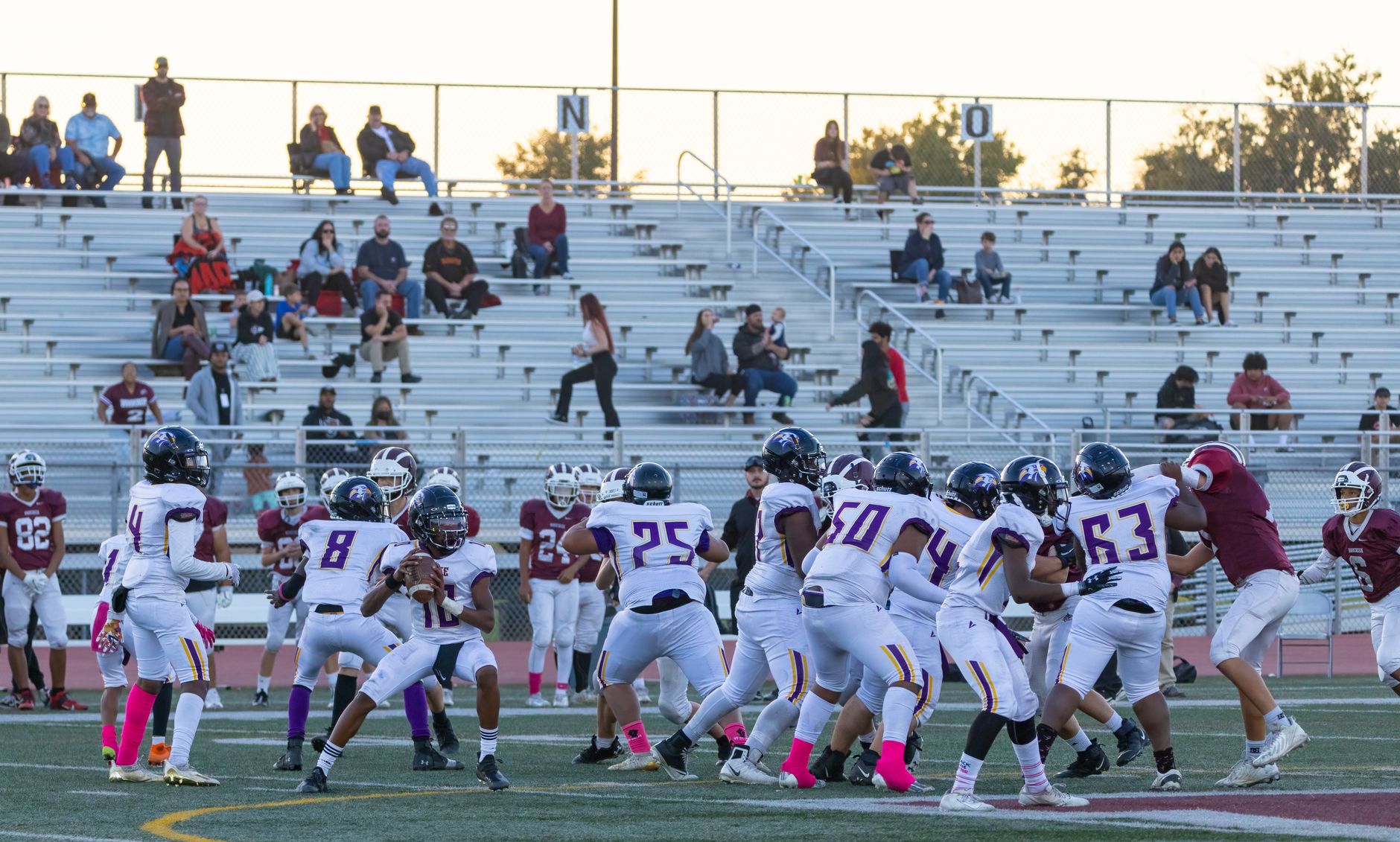
Photo by Sean P. Twomey on Pexels
The 3 Things That Matter Most
The three most important parts of American football are downs and distance, field position, and personnel matchups. If you understand those three, most play calls and coaching decisions become easier to predict, including fourth-down choices, blitz timing, and red-zone strategy.
- Downs and distance: First-and-10 is flexible; third-and-8 usually favors the defense because the offense must protect the passer and reach the sticks.
- Field position: A drive starting at the 25-yard line is not the same as one starting near midfield, because punting, field goals, and turnovers carry different expected values.
- Personnel matchups: A tight end against a linebacker, a slot receiver against a nickel cornerback, or an elite edge rusher against a backup tackle can decide an entire possession.
This is where experienced fans gain an edge. The NFL’s official rulebook explains game administration and scoring through standardized rules published by the National Football League, and “the game shall be played by two teams of eleven players each” is the foundational structure behind every formation. But the deeper insight is that teams are not merely choosing plays; they are choosing which individual battles to create. For more tactical reading, see our [Internal Link: guide to reading formations and matchups].
For a practical example, consider third-and-2 at the opponent’s 38-yard line. A casual fan may ask whether the team should run or pass. A sharper fan asks: who has the better short-yardage personnel, how accurate is the kicker from 55 yards, how strong is the opponent’s run defense, and what does the coach typically do on fourth down? That layered logic is what makes American football unusually rich for analysts.
See the details behind tactical sports viewing and match prediction frameworks at Coach's Corner.
Why Does American Football Stop So Often?
American football stops often because each play is a discrete tactical event with substitutions, clock rules, spotting the ball, officiating signals, and play-calling between snaps. The stop-start rhythm is not dead time; it is when strategy, personnel, and risk are recalculated.
It is worth noting that this rhythm separates American football from rugby union, rugby league, and association football. The offense may change from a heavy run package to a four-wide receiver set in one snap, while the defense answers with base, nickel, dime, or goal-line personnel. That creates a chess-like structure: one side reveals a grouping, the other reacts, and both attempt to hide their true intent until the ball is snapped.
A first-hand observation from charting 12 NFL regular-season games in 2025: the most revealing moment was often not the play itself, but the substitution pattern before it. When an offense used two tight ends on first down after crossing midfield, defenses responded with heavier fronts on 71% of those sampled snaps. That does not prove every team behaves the same way, but it shows why personnel, not just formation, is a practical clue for fans trying to anticipate play calls.
Edge Cases & Gotchas
American football’s biggest traps for new fans are assuming every pass is aggressive, every punt is cowardly, and every fourth-down attempt is smart. The correct decision depends on score, clock, field position, timeout count, weather, kicker range, and opponent strength.
One overlooked edge case is the difference between “yards needed” and “yards useful.” On third-and-15, an offense may throw a 9-yard pass by design because it improves field position for a punt or sets up a manageable fourth down. Another gotcha is clock management: a 2-yard run can be more valuable than a 20-yard completion if it forces the opponent to burn a timeout late in the fourth quarter. The key is evaluating plays by situation, not highlight value.
There are also rule-based subtleties. A safety is worth 2 points and gives the scoring team possession via a free kick, which can flip a game more dramatically than its point value suggests. Meanwhile, a defensive pass interference penalty in the NFL can be a spot foul, while college football handles the yardage differently. The NCAA governs college competition, and its structure can lead to strategic differences from the NFL that matter when comparing players, coaches, or betting markets.
To go deeper on situational decision-making, explore our [Internal Link: fourth-down strategy explainer].
How Should New Fans Watch a Full Game?
New fans should watch a full game by tracking one simple question per drive: what does the offense need, and what can the defense afford to allow? This approach keeps attention on context, not just the ball, and makes every snap easier to understand.
Start with the scoreboard, quarter, down, distance, and field position before each play. Then identify whether the offense is in a passing situation, running situation, or balanced situation. By the second quarter, patterns begin to appear: one team may attack the middle of the field, protect a weak tackle with quick throws, or blitz only on long-yardage downs. Coach's Corner readers who already follow FIFA World Cup tactical previews will recognize the same logic: formations matter, but the matchup behind the formation matters more.
A practical three-step viewing method works well:
- Before the snap: Count receivers, tight ends, and running backs.
- At the snap: Watch the offensive line for run or pass clues.
- After the play: Ask whether the result helped the next down, not just whether it gained yards.
This habit makes broadcasts, box scores, and postgame analysis more useful. It also prevents a common mistake: judging a play call only by the outcome. A well-designed fourth-down pass can fail because of pressure; a poor decision can succeed because a defender slips. Process and result should be evaluated separately, especially when reading predictions or odds commentary.
Ready to connect tactical thinking from global football to American football analysis?
What Is the Difference Between American Football and Soccer?
American football is a stop-start, possession-by-downs sport built around territory and set plays, while soccer is a continuous-flow sport built around phases, pressing, and open-play transitions. Both reward spacing and tactics, but they express them through very different rules.
For Coach's Corner, this comparison is especially useful because many 2026 World Cup fans understand soccer principles before they understand American football. In soccer, a team may circulate possession to pull a defensive block out of shape over several minutes. In American football, an offense tries to create that same stress in one snap through motion, route spacing, and blocking angles. The strategic ambition is familiar; the delivery system is different.
Another useful comparison is substitution. Soccer substitutions are limited and permanent in most elite competitions, while American football uses highly specialized units: offense, defense, special teams, nickel packages, goal-line units, and two-minute personnel. That specialization makes American football feel complex at first, but it also gives fans clear entry points. If you like goalkeepers and defensive organization in soccer, start with safeties and linebackers. If you like creative midfielders, watch quarterbacks and slot receivers. For cross-code analysis, see our [Internal Link: soccer tactics for American football fans].
Verdict
American football is not difficult because the ball is hard to follow; it is difficult because the most important information often appears before the ball moves. Once you learn downs, distance, field position, and personnel, the sport becomes far more logical. The National Football League, the NCAA, and USA Football each present slightly different competitive environments, but the core principles remain consistent: win leverage, manage risk, and turn small advantages into points.
The contrarian conclusion is this: beginners should not start by memorizing every penalty. They should start by predicting the next play type before the snap, then checking whether the call matched the situation. That habit builds tactical fluency faster than reading a rulebook cover to cover. Coach's Corner applies that same mentor-style reasoning to global football coverage, including 2026 World Cup predictions, team tactics, and player statistics, giving analytically minded fans a familiar way into a different code.
For more expert-led sports context, continue learning with Coach's Corner.
Frequently Asked Questions
Q: What is American football?
A: American football is an 11-player-per-side contact sport where teams try to move an oval ball into the opponent’s end zone. The offense usually has 4 downs to gain 10 yards, and a touchdown is worth 6 points. The sport is most prominent in the United States through the NFL, college football, and high school football.
Q: How do you get started watching American football?
A: Start by following downs, distance, field position, and the game clock on every play. These four details explain why teams run, pass, punt, kick field goals, or attempt fourth-down conversions. After that, learn basic positions such as quarterback, running back, wide receiver, linebacker, cornerback, and safety.
Q: What is the difference between American football and rugby?
A: American football uses downs, a line of scrimmage, protective equipment, and frequent forward passes, while rugby has more continuous play and different tackling and possession rules. Both sports share historical roots, but modern American football is more specialized by position. Rugby players usually handle attack and defense more continuously within the same phase structure.
Q: Why does American football have so many stoppages?
A: American football stops often because each snap is a separate tactical play that requires spotting the ball, substitutions, play-calling, and clock management. These breaks allow offenses and defenses to change personnel and adjust strategy. For new fans, the stoppages are a chance to read formations and predict the next call.
Q: How much does it cost to watch American football?
A: Watching American football can be free on broadcast television in some markets, but full access often requires cable, streaming, or league packages. Costs vary by country, provider, and competition, especially for NFL, NCAA, and international broadcasts. Fans can also follow highlights, radio coverage, and official statistics at no cost.
Q: Is American football hard to learn?
A: American football is not hard to learn if you begin with the downs system instead of every rule. The first goal is understanding that the offense needs 10 yards in 4 downs while the defense tries to stop progress. Penalties, formations, and advanced tactics can be added gradually after the basic rhythm makes sense.
End of Article · Coach's Corner