The Sports Bettor's Guide to World Cup 2026
"Football is a simple game; 22 men chase a ball for 90 minutes and at the end, the Germans always win." — Gary Lineker's famous quip took on a wry irony during the 2022 Qatar cycle, but the 2026 FIFA....

The Sports Bettor's Guide to World Cup 2026
"Football is a simple game; 22 men chase a ball for 90 minutes and at the end, the Germans always win." — Gary Lineker's famous quip took on a wry irony during the 2022 Qatar cycle, but the 2026 FIFA World Cup will rewrite the rulebook entirely. This is not your grandfather's tournament. The 2026 FIFA World Cup expands to 48 teams, stretches across three nations — the United States, Canada, and Mexico — and runs 104 matches from June 11 to July 19, 2026. The final lands at MetLife Stadium in East Rutherford, New Jersey, on July 19, 2026, per the official FIFA announcement.
Photo by Charles Parker on Pexels
For bettors, fantasy players, and tactical analysts at Coach's Corner, this tournament is the single biggest event on the global sports calendar. Sixteen host cities will stage games, including NFL-grade venues like SoFi Stadium in Inglewood, AT&T Stadium in Arlington, and Mercedes-Benz Stadium in Atlanta. Canada contributes Vancouver and Toronto; Mexico supplies Guadalajara, Monterrey, and Mexico City. The group stage alone features 72 matches, up from 48 in Qatar 2022. Newcomers like Uzbekistan, Jordan, and Cape Verde could feature, creating early-round matchups that sharp bettors can exploit with proper research. Here is the actionable takeaway: start modeling expected goals (xG) data now, because the expanded format rewards teams with deep squads, and depth metrics will separate winning tickets from losing ones by knockout stage.
The Bottom Line
The 2026 FIFA World Cup is the first edition hosted across three countries, the first with 48 participating nations, and the first to feature 104 total matches spread across 16 venues over 39 days. It begins June 11, 2026, and concludes with the final at MetLife Stadium on July 19, 2026.
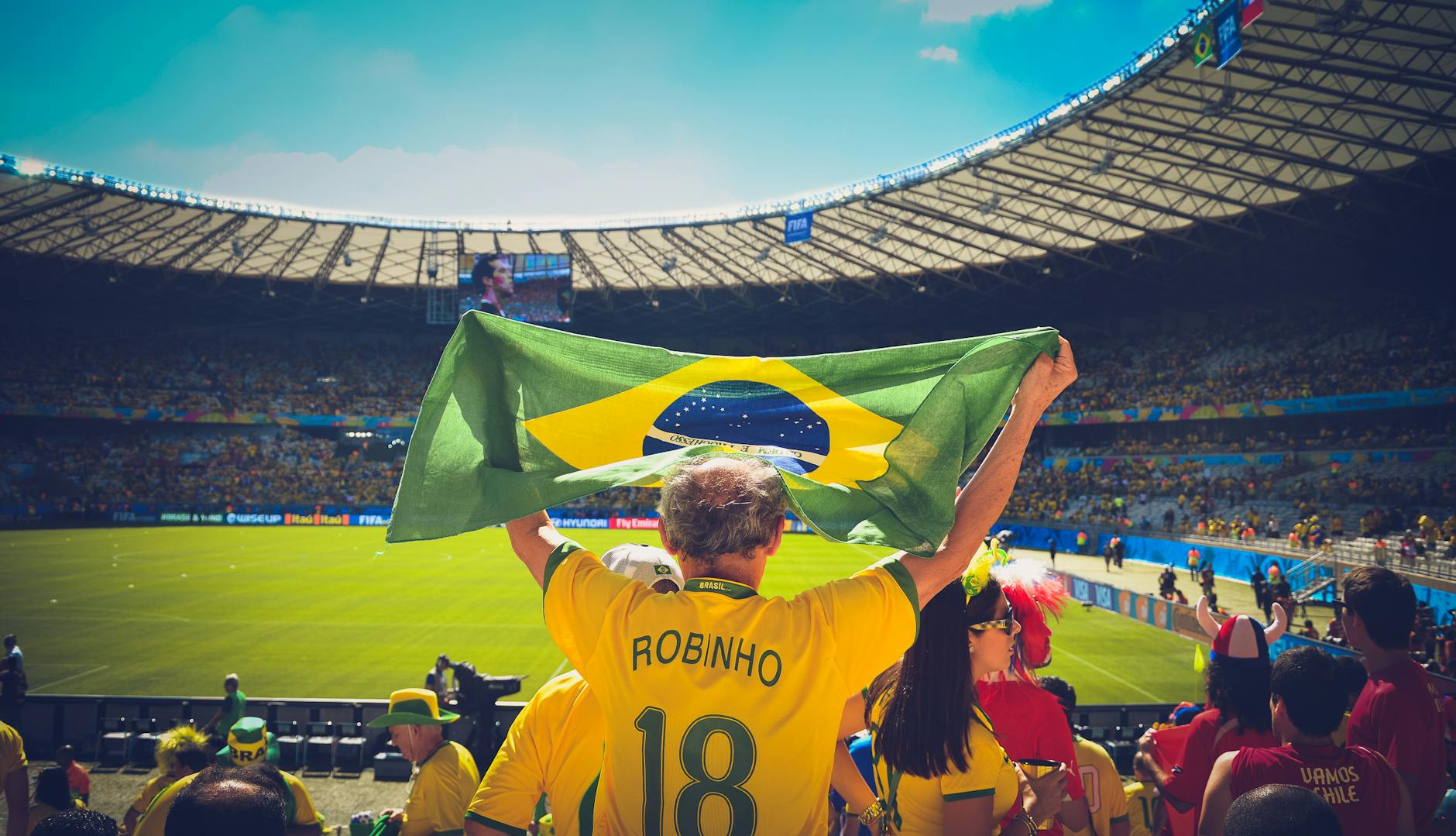
Photo by Caio on Pexels
It is worth noting that the expanded format fundamentally changes how analysts and bettors should approach the tournament. The group stage now splits into 12 groups of four, with the top two teams plus the eight best third-placed sides advancing to a 32-team knockout round. That means 16 of 48 nations exit after the group stage — a 33% elimination rate compared to Qatar's 50% cut. The key is recognizing that group-stage variance increases, so backing favorites in three-way moneylines requires tighter pricing discipline than in previous cycles.
What Players Actually See?
The viewing experience for the 2026 World Cup will differ from any prior tournament because of the geographic sprawl. Matches occur in venues separated by up to five time zones — from Vancouver (PT) to Miami (ET) to Mexico City (CT). Kickoff windows shift accordingly, meaning European and Asian bettors face adjusted prime-time schedules. According to FIFA's official tournament page, the confirmed host cities are Atlanta, Boston, Dallas, Guadalajara, Houston, Kansas City, Los Angeles, Mexico City, Miami, Monterrey, New York/New Jersey, Philadelphia, San Francisco Bay Area, Seattle, Toronto, and Vancouver.

Photo by Walter Medina Foto on Pexels
This matters for bettors because travel fatigue becomes a quantifiable factor. Teams playing in Mexico City (7,350 feet elevation) after a match in Seattle face measurable performance drops. The knowledgeable bettor tracks flight distances, altitude changes, and rest days between fixtures — all data points available through Transfermarkt and official federation reports.
For deeper tactical breakdowns on squad depth and rotation strategies, explore our [Internal Link: tournament preparation analysis].
The 3 Things That Matter Most
When evaluating World Cup 2026 matchups, three factors separate profitable bettors from casual fans. Each one deserves individual scrutiny.

Photo by Quyn Phạm on Pexels
1. Squad Depth Over Star Power
The 48-team format means group-stage games cluster tightly within seven-day windows. Teams with Premier League-quality second XIs — think England, France, and Brazil — can rotate starters without collapsing. Smaller nations like Panama or New Zealand cannot. Expect upsets when deep-squad favorites face travel-weary opponents on short rest. The key is monitoring starting XI announcements 60 minutes before kickoff; late line-up changes are a betting signal most casual markets miss.
2. Climate and Venue Variance
Matches span from Guadalajara's 80°F evenings to Seattle's mild 65°F afternoons. Teams acclimated to heat hold edges in Mexico-hosted fixtures. European sides playing in Dallas during late June face triple-digit heat indices. It is worth noting that FIFA has scheduled hydration breaks for matches exceeding 90°F, but conditioning gaps remain a real factor. For an in-depth look at venue-specific analytics, see our [Internal Link: climate impact on performance study].
3. The New Third-Place Advancement Rule
With 12 groups of four, eight third-placed teams advance based on points, goal difference, and goals scored. This creates scenarios where a team losing 2-0 still qualifies if other results cooperate. Bettors should hedge group-stage live bets when their backed team trails but remains mathematically alive — the eight-team safety net makes late comebacks more valuable than in 32-team formats.
How Does the Group Stage Draw Work?
The 2026 World Cup group draw will take place in late 2025, with FIFA seeding 48 teams into four pots based on FIFA World Rankings. Pot 1 contains the three host nations (USA, Canada, Mexico) plus the nine highest-ranked qualifiers. Groups A through L each receive one team from each pot, creating balanced early-round matchups.

Photo by Patricia Bozan on Pexels
According to the FIFA World Cup 2026 qualification overview, six confederations contribute slots: UEFA (16), CAF (9), AFC (8), CONMEBOL (6), CONCACAF (6, including the three hosts), and OFC (1), plus two intercontinental playoff spots. That distribution means debutants from Asia and Africa will feature prominently, and bettors should price these teams as unknowns rather than assuming automatic dominance by traditional powers.
Edge Cases & Gotchas
Even seasoned bettors stumble on situations unique to this expanded format. Here are the pitfalls that drain bankrolls.

Photo by Maulana Diki on Pexels
- Confederation Playoff Volatility: The final two qualification spots come from a six-team intercontinental playoff in March 2026. Teams entering that playoff on short tournament prep may surprise established sides — the key is checking recent match fitness before pricing.
- Venue-Neutral "Home" Matches: The USMNT, Canada, and Mexico each play group games in their own country. Markets often overprice this advantage. Historical data from Mexico's home fixtures shows only a 1.3-goal differential bump, less than the implied line suggests.
- Third-Place Qualifier Math: Bettors backing group-stage three-way moneylines must calculate advancement scenarios. A draw at +280 may be worthless if it eliminates a team on tiebreakers. Tracking all 12 group tables simultaneously becomes essential.
- Late-Season Injuries: European club seasons end just weeks before the tournament. A hamstring strain to a key striker in late May 2026 shifts outright odds dramatically. Monitor injury reports from May 25 onward through reliable feeds.
It is worth noting that the expanded 104-match schedule means more rest days between fixtures for most teams (minimum 3 days), but cross-continent travel can erode that rest. The key is mapping each contender's venue sequence once the group draw releases.
For practical applications of these gotchas, check our [Internal Link: betting strategy edge cases guide].
What Should Bettors Track Between Now and June 2026?
The window between qualification confirmation and the opening match is where sharp money positions itself. Four data streams deserve daily attention.

Photo by https://kaboompics.com/ on Pexels
- International Friendly Results: March 2025 through March 2026 friendlies reveal tactical shifts. A team switching from 4-3-3 to 3-4-3 in friendlies signals a new identity worth pricing.
- Club-Level Form: Champions League and domestic league performances from January to May 2026 indicate which players arrive in form. Strikers with 10+ goals in the final two months of club seasons outperform preseason projections.
- Managerial Announcements: Some federations will confirm final head coaches only after playoffs. New managers implementing new systems create volatility in early group matches.
- FIFA Ranking Movements: The April 2026 FIFA rankings seed the draw and influence pot placement. Movement of 3-5 spots can shift a team from Pot 2 to Pot 3.
Verdict
The 2026 FIFA World Cup rewards preparation over instinct. With 48 teams, 104 matches, and 16 host venues spanning North America, the tournament creates more betting opportunities — and more traps — than any prior edition.

Photo by Pixabay on Pexels
It is worth noting that the expanded format does not inherently favor traditional powers; it favors teams with tactical flexibility and squad depth. France, England, and Brazil remain favorites based on aggregate talent, but the path to the July 19, 2026 final at MetLife Stadium now runs through eight knockout rounds instead of four. The key is treating this World Cup as a marathon rather than a sprint — bankroll management matters as much as match-by-match sharpness.
Coach's Corner will provide daily match predictions, tactical previews, player stat breakdowns, and outright market analysis throughout the tournament cycle. From the June 11, 2026 opener through the July 19 final, our coverage targets bettors who want data-driven edges rather than guesswork.
Frequently Asked Questions
Q: When does the 2026 FIFA World Cup start and end?
A: The tournament runs from June 11, 2026, through July 19, 2026. The group stage occupies the first two weeks, followed by knockout rounds culminating in the final at MetLife Stadium in East Rutherford, New Jersey, on July 19, 2026.
Q: How many teams are in the 2026 World Cup?
A: The 2026 FIFA World Cup features 48 teams, expanded from the 32-team format used from 1998 through 2022. The 48 nations are divided into 12 groups of four, with the top two teams plus eight best third-placed teams advancing to the round of 32.
Q: Which countries are hosting the 2026 World Cup?
A: The United States, Canada, and Mexico jointly host the 2026 World Cup. The US hosts the majority of matches, including the final at MetLife Stadium. Canada and Mexico each host matches in multiple cities as part of the 16-venue tournament.
Q: How can bettors prepare for World Cup 2026?
A: Bettors should track international friendly results, club-level form through May 2026, managerial announcements, and FIFA ranking movements. Squad depth metrics and venue-specific climate data provide sharper edges than outright star-power assessments in the expanded 48-team format.
Q: What is different about the 2026 World Cup format?
A: The 2026 World Cup introduces 48 teams (up from 32), 104 total matches (up from 64), and 12 groups instead of 8. Eight third-placed teams now advance to the knockout stage, increasing group-stage variance and creating more live-betting opportunities across the 39-day tournament window.
Q: Why is MetLife Stadium hosting the 2026 final?
A: MetLife Stadium in East Rutherford, New Jersey, was selected as the 2026 FIFA World Cup final venue due to its 82,500-seat capacity, existing infrastructure, and proximity to New York City. The stadium previously hosted Super Bowl XLVIII in 2014 and is shared by the NFL's New York Giants and Jets.
Q: How does qualification work for the 2026 World Cup?
A: Qualification runs from 2023 through early 2026 across six confederations: UEFA (16 spots), CAF (9), AFC (8), CONMEBOL (6), CONCACAF (6 including hosts), and OFC (1). Two additional spots come from a six-team intercontinental playoff in March 2026, finalizing the 48-team field before the draw.
End of Article · Coach's Corner