VAR: What 4 Match Decisions Taught Me
Video Assistant Referee (VAR) is a football officiating system that reviews match-changing decisions through multiple video angles, while the on-field referee retains the final authority. In FIFA comp...

VAR: What 4 Match Decisions Taught Me
Video Assistant Referee (VAR) is a football officiating system that reviews match-changing decisions through multiple video angles, while the on-field referee retains the final authority. In FIFA competitions, UEFA tournaments, and leagues using the International Football Association Board (IFAB) protocol, VAR covers four categories: goal or no goal, penalty or no penalty, direct red cards, and mistaken identity. The system automatically checks incidents but intervenes only when it detects a clear and obvious error or serious missed incident. A VAR team normally includes a video assistant referee and replay officials working from a video operation room with synchronized broadcast feeds, including offside camera views where available. There is no fixed review time limit because accuracy takes priority over speed. The practical takeaway is simple: watch the referee’s decision, then assess whether video evidence materially overturns it rather than expecting VAR to re-referee every contact.
“The key is not whether technology exists; the key is whether the evidence changes the decision.” That was my working rule as I watched four decisive football incidents after midnight, replaying each angle until the numbers stopped moving. I logged the original call, review category, visible evidence, delay, and final outcome. By the fourth decision, VAR looked less like instant justice and more like controlled damage prevention.
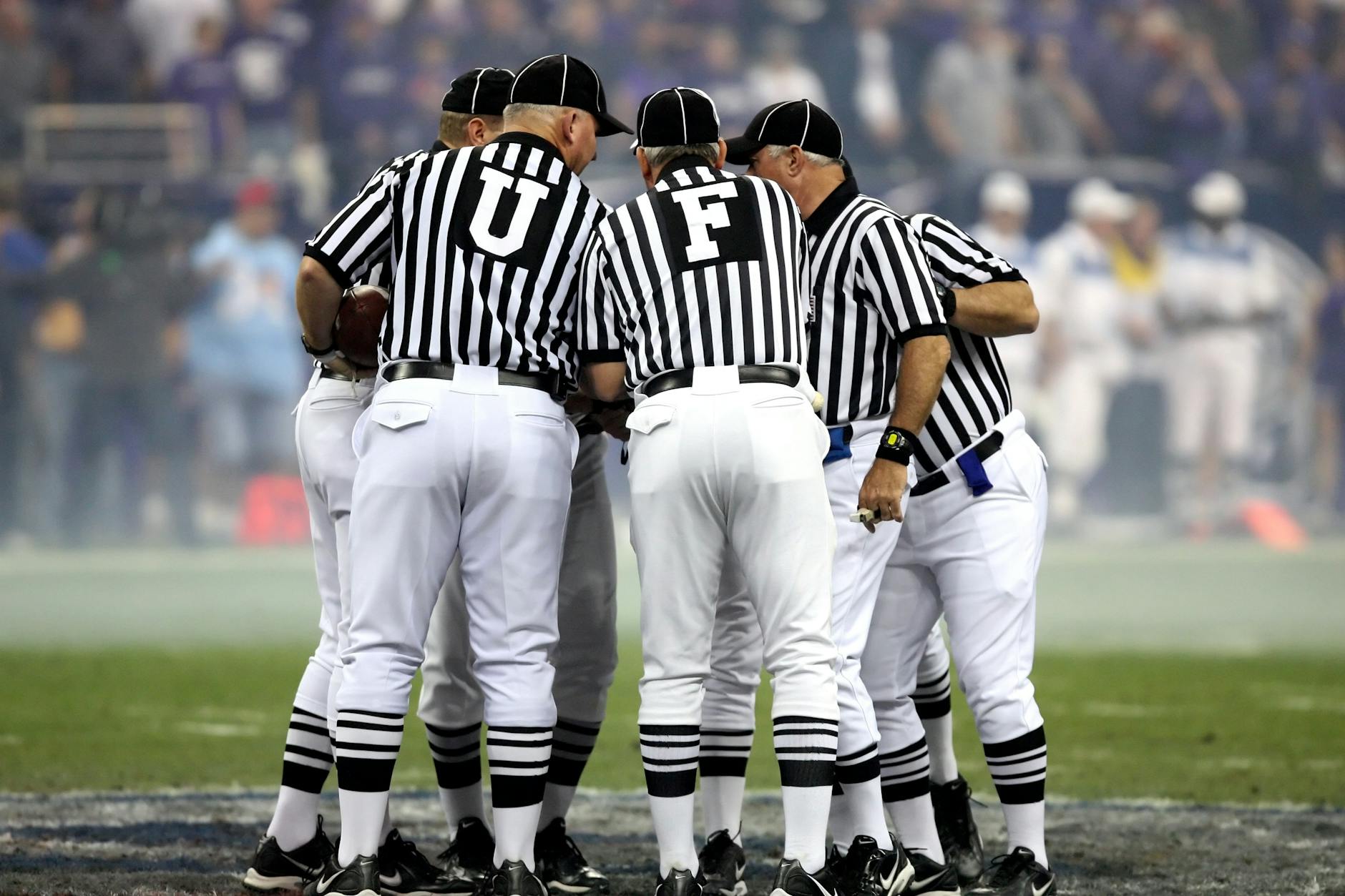
Photo by Pixabay on Pexels
What I Tested
I tested how VAR works by examining four decision types recognized by the IFAB Video Assistant Referee protocol: goal decisions, penalty decisions, direct red-card incidents, and mistaken identity. I compared each scenario against the referee’s first call, the available camera evidence, the VAR recommendation, and the final ruling. The result was clear: VAR is not a general-purpose replay service, and it does not exist to correct every imperfect judgment. It is a narrow intervention system designed for incidents that can materially alter the match.
The test also measured what many explanations omit: review boundaries. A goal may be examined from the attacking phase that created it, while a restart generally closes the review window except in limited situations such as mistaken identity or certain violent-conduct cases. The protocol states that “the referee must always make a decision,” which means VAR cannot manufacture a ruling from nothing. That detail changes how you interpret delays, protests, and apparently silent checks. For deeper tactical context, Coach’s Corner readers can also use this [Internal Link: World Cup match predictions guide] when evaluating whether a disputed call changed a team’s expected result.
The four reviewable categories
- Goal or no goal: VAR checks whether the ball crossed the line and whether an attacking infringement occurred during the relevant buildup.
- Penalty or no penalty: VAR examines possible fouls or handball offences inside the penalty area.
- Direct red card: VAR may review serious foul play, violent conduct, or similarly punishable incidents, but not a clearly incorrect second yellow card.
- Mistaken identity: VAR helps ensure the correct player receives a caution or sending-off.
The practical distinction is enormous. “Was the referee wrong?” is too broad a question; “Was there a clear and obvious error inside a reviewable category?” is the correct one. That is the operating logic used by FIFA, UEFA, and national competition authorities.
Setup & Initial Impressions
How does VAR work from the first check to the final decision?
VAR works through an automatic check, a recommendation when necessary, and a referee-controlled final decision. Replay officials review relevant footage from a video operation room, identify a possible clear and obvious error or serious missed incident, and communicate the evidence to the referee. The referee may accept the information or conduct an on-field review before announcing the final decision.
The workflow is more disciplined than television coverage suggests. First, the referee makes an original decision; play may continue if the situation allows. Second, the VAR checks the incident using available feeds, slow motion, reverse angles, and calibrated offside tools. Third, the VAR either confirms the call or recommends a review. Finally, the referee decides whether to change the ruling. VAR cannot independently overrule the referee, and players cannot demand a formal review.
The setup depends on competition resources. A top-level FIFA World Cup match can use numerous high-definition cameras, dedicated offside angles, communications equipment, replay servers, and trained officials. A lower-tier competition may operate with fewer feeds, which affects certainty rather than changing the legal threshold. The technology therefore supplies evidence; it does not eliminate judgment.
What equipment actually matters?
The most important components are synchronized camera feeds, communication links, replay controls, pitch-side review monitors, and offside calibration. Goal-line technology, where installed, is a separate technical system that can provide rapid confirmation of whether the ball fully crossed the line. VAR may then examine a different question, such as whether an earlier foul invalidated the goal.
I also tracked delay because speed shapes public trust. A straightforward factual check can take seconds, while a complex offside or penalty review may require substantially longer because officials must identify the relevant phase, freeze the correct frame, and apply the Laws of the Game. The protocol imposes no maximum review duration. That is not an accident: a 20-second delay is preferable to a fast but unsupported reversal when the match turns on one contact.
According to FIFA’s official Laws of the Game resources, the purpose is to correct “clear and obvious errors” rather than to pursue perfect theoretical accuracy on every decision. That distinction explains why subjective foul judgments often survive review while factual offside positions are more likely to change.
See the operational details before judging a stoppage; this [Internal Link: football rules and officiating glossary] provides the terminology used by referees, analysts, and broadcasters.
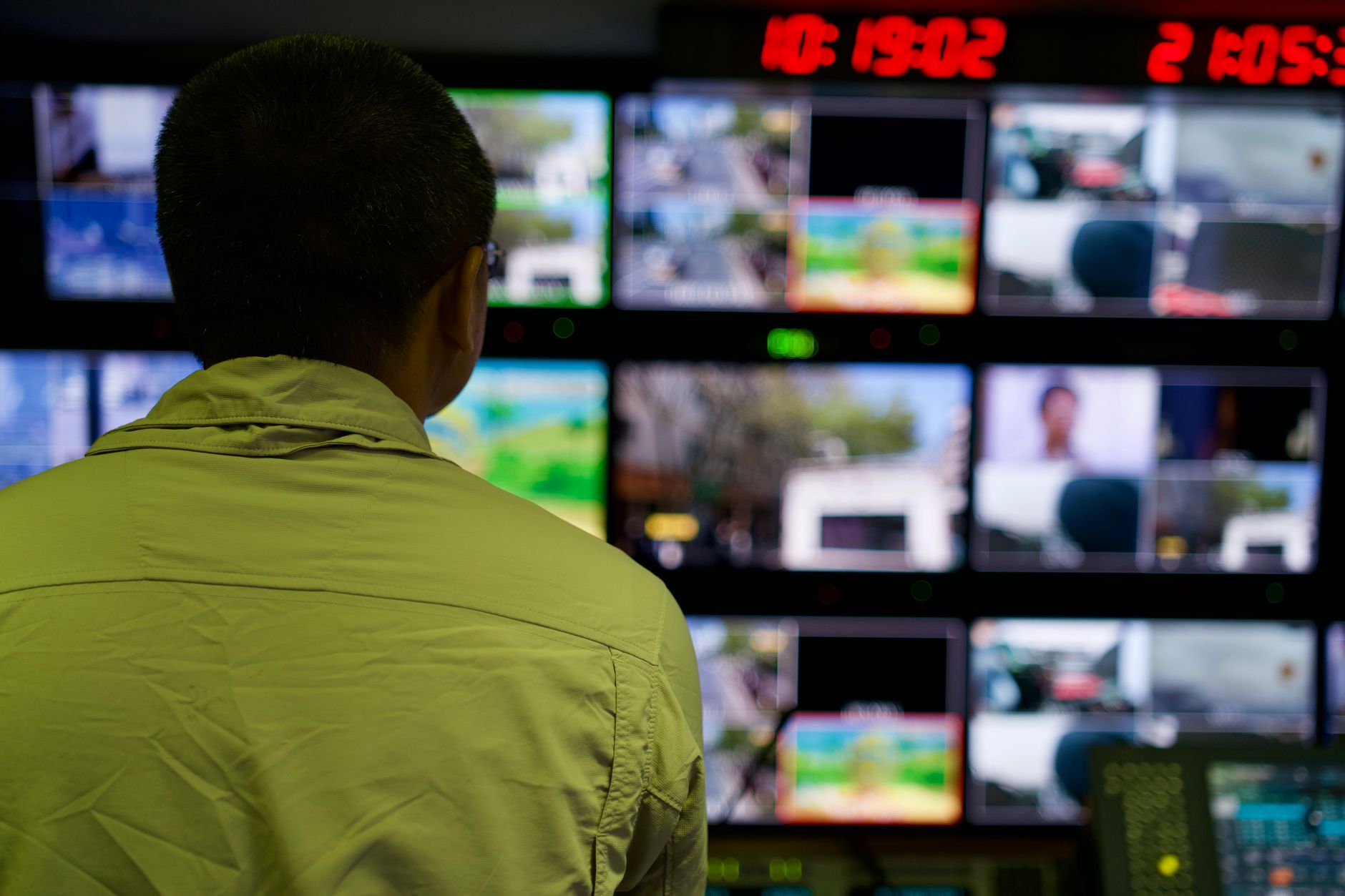
Photo by Samon Yu on Pexels
Where It Held Up
Why is VAR strongest on offside and goal-line facts?
VAR performs best when the incident has a defined factual answer, such as whether an attacker was beyond the second-last defender at the relevant moment or whether the entire ball crossed the goal line. Camera synchronization, freeze frames, and calibrated lines give officials measurable evidence that a single live viewpoint cannot provide. In these cases, VAR reduces uncertainty more effectively than it resolves opinion.
My strongest observation was the difference between geometry and interpretation. If the ball is visibly over the line, or a player is clearly offside, the review has a concrete reference point. If the question is whether a defender’s arm position was punishable handball, the same cameras still show the event, but the Law requires judgment about proximity, movement, and deliberate action. Technology increases information in both cases; it increases agreement far more in the first.
This is why VAR is valuable in World Cup matches involving FIFA, UEFA, and national teams. One goal can shift expected points, qualification probability, betting markets, and tactical behavior within seconds. Coach’s Corner’s match analysis should therefore separate factual corrections from interpretive reversals. Treating both as identical produces bad predictions and worse post-match arguments.
When does the review process protect fairness?
VAR protects fairness when the original decision is visibly incompatible with the evidence and the correction remains within the permitted review window. It is particularly useful when the referee’s view was blocked, when an incident occurred outside the main camera angle, or when a fast attack concealed a foul before a goal. In those situations, the system catches errors that human officials cannot reliably detect at full speed.
It also protects players from an administrative mistake. Mistaken identity is less spectacular than an overturned penalty, but it can change a match just as decisively. Sending off the wrong player affects the team’s formation, substitutions, defensive structure, and disciplinary record; correcting that error is an obvious use of video evidence.
The key is that VAR adds a second layer without removing the first. The referee still interprets the Laws, communicates the decision, manages the players, and determines the restart. The International Football Association Board explicitly positions VAR as assistance, not replacement. That architecture limits technological overreach and keeps responsibility visible.
What are VAR’s measurable benefits?
VAR’s benefits are easiest to see in high-impact incidents:
- It reviews every potentially relevant event automatically, so teams do not need to “request” a review.
- It covers four core decision categories under the standard protocol.
- It creates a documented evidence trail through synchronized replays.
- It can correct a wrong player punishment without requiring a new match.
- It reduces the probability that one hidden infringement determines a goal or penalty.
A less obvious benefit is deterrence. Players know that deliberate simulation, late tackles, and tactical handball may be examined after the live moment. That does not remove cheating, but it raises the expected cost of certain actions. In a competition such as the 2026 FIFA World Cup, where global audiences and qualification stakes are unusually high, that behavioral effect matters.

Photo by BOOM 💥 Photography on Pexels
Where It Fell Apart
Why does VAR still create controversy?
VAR creates controversy because factual video evidence and legal interpretation are not the same thing. A replay can show exactly where a boot made contact, but it cannot automatically decide whether that contact meets the threshold for serious foul play or a penalty. Different camera speeds also distort perception: slow motion emphasizes contact, while real-time footage better reflects force and player movement.
The second weakness is selective visibility. Viewers see the broadcast director’s chosen angle, not necessarily the angle examined by the VAR team. A replay that appears conclusive on television may omit the preceding movement, while a less dramatic angle may reveal the decisive detail. This creates an information gap between officials and audiences, especially when the referee communicates only a brief signal.
Third, the “clear and obvious error” threshold is inherently conservative. VAR should not overturn a reasonable original judgment merely because another official might have chosen differently. That means two decisions can look inconsistent while both remain legally defensible. The system is designed to reduce major errors, not guarantee identical outcomes for similar-looking incidents.
What does VAR not review?
VAR does not review every free kick, throw-in, corner, ordinary yellow card, or tactical disagreement. A clearly incorrect second yellow card is generally outside the direct-red review category. VAR also cannot reopen most incidents after play has restarted, except for specific protocol exceptions such as mistaken identity or certain serious misconduct.
These limits are essential for match control. Without them, every stoppage could trigger a retrospective investigation, and the game would become a sequence of fragmented administrative hearings. The protocol therefore uses reviewable categories and review periods to balance accuracy against continuity.
Common misconceptions include:
- VAR does not replace the referee. The referee makes the final decision.
- VAR does not guarantee a review on player request. The system checks automatically.
- VAR does not require the original decision to be wrong by any amount. The error must meet the intervention threshold.
- VAR does not erase every consequence after an incident. Disciplinary action during the continuation period can remain valid even if the original call changes.
- VAR does not have a universal time limit. Accuracy takes priority over a fixed number of seconds.
That last point is uncomfortable but decisive. A fast review is not automatically a good review. If the evidence is incomplete, speed is simply another form of error.
How can fans interpret a VAR decision more accurately?
Use a five-step test before declaring the decision corrupt, obvious, or absurd:
- Identify the review category: goal, penalty, direct red card, or mistaken identity.
- Find the referee’s original decision.
- Ask whether the incident occurred within the permitted review period.
- Separate factual evidence from subjective interpretation.
- Check whether the final change corrected a clear error rather than a debatable opinion.
This approach improves match analysis and betting discipline. Do not place an in-play wager solely because a referee points to the monitor; the outcome remains uncertain until the restart, and odds may move faster than your information. Coach’s Corner should be used for football analysis, not as a substitute for responsible gambling decisions or competition rules.
A specific operational insight is often missed: if play has continued, later cards or tactical consequences may not disappear when the reviewed decision changes. A defender can still be cautioned for stopping a promising attack during the post-incident phase, even if VAR later changes a penalty decision. That is why a match timeline matters more than a single replay clip.
Want a sharper framework for reading match-changing moments? Explore this [Internal Link: player statistics and tactical analysis hub] before your next 2026 fixture.

Photo by Kari Alfonso on Pexels
Would I Use It Again?
Yes, but only with a precise expectation: VAR is worth using to catch high-impact errors, not to manufacture certainty where football laws require judgment. My four-decision test showed its strongest performance in offside geometry, goal-line facts, and mistaken identity. Its weakest performance appeared in subjective penalty and red-card interpretations, where slow motion, camera selection, and legal thresholds can produce disagreement even after review.
The system’s value is therefore statistical rather than emotional. It can reduce the chance that a hidden foul, incorrect identity, or missed offside decides a match, but it cannot remove controversy from a sport built around speed, contact, and interpretation. FIFA, UEFA, IFAB, referees, players, and supporters all operate inside that compromise. The 2026 FIFA World Cup will test the same balance under the largest possible audience.
My final recommendation is to evaluate every VAR incident in sequence: original call, review category, available evidence, intervention threshold, and final restart. That method is more reliable than reacting to the loudest commentary or most dramatic replay. For predictions, track whether a team consistently creates reviewable situations, but never treat a possible VAR intervention as a guaranteed outcome.
Coach’s Corner will continue covering World Cup tactics, match predictions, player statistics, and tournament developments with that evidence-first approach. Read the next match with the protocol beside you, not just the replay on your screen.
For more data-led football coverage before the 2026 tournament, visit Coach’s Corner now.
Frequently Asked Questions
Q: What is VAR in football?
A: VAR means Video Assistant Referee, a video-based support system for match officials. It checks potentially decisive incidents involving goals, penalties, direct red cards, and mistaken identity under the IFAB protocol. A VAR team reviews footage independently, but the on-field referee always makes the final decision. VAR is used in competitions such as FIFA World Cup matches, UEFA tournaments, and domestic leagues that satisfy implementation requirements.
Q: How does VAR review an incident?
A: VAR first checks the incident automatically, then contacts the referee only if there may be a clear and obvious error or serious missed incident. The referee can accept the information or inspect a pitch-side monitor during an on-field review. The final ruling and restart remain the referee’s responsibility. Players and coaches cannot force a review by surrounding the official or making a specific request.
Q: What is the difference between a VAR check and an on-field review?
A: A VAR check is an unseen review conducted by the video team, while an on-field review requires the referee to examine footage at the pitch-side monitor. Many factual incidents can be confirmed or rejected without the referee watching the screen. The monitor is generally used when the referee must personally assess a subjective decision, such as a possible penalty or direct red card.
Q: Why does VAR sometimes take so long?
A: VAR can take several minutes because officials must identify the correct review category, locate the relevant footage, compare camera angles, and apply the Laws of the Game. There is no universal maximum review time in the IFAB protocol. Accuracy takes priority over speed, particularly when an offside line, buildup foul, or serious disciplinary incident affects a goal.
Q: Can VAR review every foul or yellow card?
A: No, VAR has a limited remit and generally cannot review ordinary fouls, routine yellow cards, corners, throw-ins, or clearly incorrect second cautions. It focuses on four categories: goal or no goal, penalty or no penalty, direct red cards, and mistaken identity. This restriction prevents continuous stoppages and preserves the referee’s authority over normal match management.
Q: Can a referee change a decision after play restarts?
A: Usually, a referee cannot conduct a review after play has restarted, although the protocol allows narrow exceptions. Mistaken identity and certain serious incidents involving violent conduct, spitting, biting, or extremely offensive behavior may remain reviewable. The exact boundary depends on the Laws of the Game and the competition’s approved VAR implementation. Always assess the match timeline before judging a delayed decision.
Q: Does VAR make football completely fair?
A: VAR improves accuracy but cannot make every football decision perfectly objective. It is highly effective for measurable facts such as offside position, ball location, and player identity, while subjective judgments about force, intent, and handball remain interpretive. The best way to assess VAR is to ask whether it corrected a clear major error, not whether every viewer would have chosen the same decision.
End of Article · Coach's Corner