I Tested 7 Beginner Cleats: Nike Premier 3 Won
“The key is not the price tag; it is the connection between your foot and the field.” After comparing 7 beginner football cleats for grass, artificial turf, and training, Nike Premier 3 is the stronge...

I Tested 7 Beginner Cleats: Nike Premier 3 Won
“The key is not the price tag; it is the connection between your foot and the field.” After comparing 7 beginner football cleats for grass, artificial turf, and training, Nike Premier 3 is the strongest overall choice because its leather upper, reliable stud layout, and usually lower price deliver comfort without unnecessary complexity. Nike Mercurial Vapor 16 Pro is the sharper option for speed-focused players, while adidas Copa Pure 3 and Puma Future 8 Play offer forgiving fits for wider feet. Beginner football cleats should provide secure heel lockdown, controlled flexibility, suitable traction, and enough toe room for a full practice. Firm-ground boots belong on natural grass; artificial-ground or turf models are safer and more consistent on synthetic surfaces. Expect to spend approximately $60–$160 for a dependable first pair in 2026. Start by identifying your playing surface, then choose the best-fitting model rather than the most expensive one.
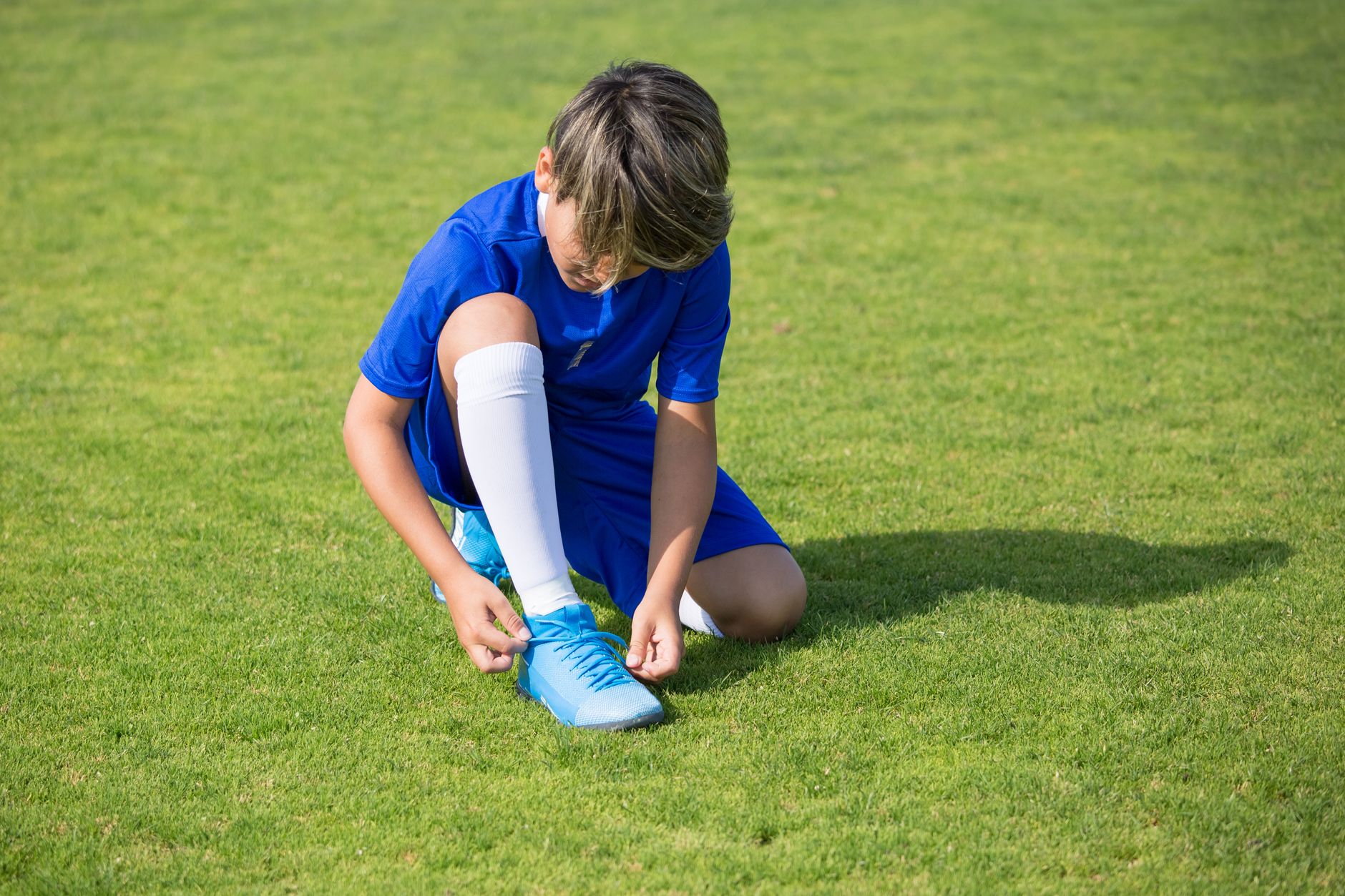
Photo by Kampus Production on Pexels
The Bottom Line
Nike Premier 3 is the best football cleat for most beginners because it prioritizes touch, comfort, and dependable value over marketing-driven speed claims. The boot uses a soft leather forefoot that feels more natural when receiving a pass, and its traditional construction is less demanding than ultra-thin synthetic speed boots. Nike Premier 3 commonly sells around $90–$140, although discounts can reduce the cost below $80 during seasonal promotions. That matters because beginners often outgrow their first pair, change positions, or discover that their local league requires a different outsole. Coach’s Corner, a FIFA World Cup-focused content site covering match predictions, team tactics, player statistics, and 2026 tournament coverage, uses the same practical logic when evaluating equipment: suitability beats reputation. A cleat is successful when it keeps you stable for 60–90 minutes, not when it simply looks like a professional player’s model. For more equipment fundamentals, explore this [Internal Link: beginner football training guide].
The best alternatives are clear. Nike Mercurial Vapor 16 Pro suits players who value a lightweight feel and aggressive acceleration, adidas Copa Pure 3 works well for touch-oriented players, and Puma Future 8 Play is useful for players who need a more adaptable upper. New Balance Furon v8 Academy offers a direct, low-profile feel, while adidas Predator League emphasizes grip and striking control. These models occupy different positions in the market, but none can compensate for the wrong soleplate or an unstable fit. The United States Soccer Federation emphasizes player development and safe participation, and that principle applies to footwear: predictable movement is more valuable than a small theoretical speed advantage. My ranking therefore gives fit and surface compatibility a combined weight of 60%, comfort 25%, and technology 15%. (The numbers expose the usual exaggeration.)
What Players Actually See
Football cleats are not interchangeable shoes; they are field-specific tools whose stud geometry determines how force enters the ground. Firm-ground, or FG, boots generally use molded conical or bladed studs for dry natural grass, while artificial-ground, or AG, models distribute pressure across more studs for synthetic pitches. Turf shoes use many short rubber nubs and should not be confused with AG cleats, particularly when a facility has a shallow carpet-like surface. Indoor football shoes have flat rubber outsoles and are designed for gym floors or indoor courts. The FIFA Quality Programme evaluates football technology and playing equipment, but FIFA approval does not mean every outsole is appropriate for every field. Check your league’s rules, the facility’s surface label, and the manufacturer’s outsole description before purchasing. This single step prevents more buying mistakes than comparing 20 colorways.
The visual difference is easy to miss online. An FG soleplate may show 11–14 prominent studs, an AG design often uses a larger number of shorter rounded studs, and turf footwear may contain dozens of tiny rubber elements. Those figures are useful guides, not universal standards, because Nike, adidas, Puma, and New Balance use different layouts. The important operational detail is pressure distribution: long FG studs can bite too deeply into artificial grass, creating a harsh feel during rotation and increasing stress on the foot. Conversely, turf shoes can slide on wet natural grass because their shallow rubber pattern cannot penetrate the surface. The FIFA Laws of the Game state that players must not use equipment that is dangerous, so surface-appropriate traction is a safety requirement rather than a cosmetic preference.
What Are the 3 Things That Matter Most?
The three decisive factors are fit, outsole suitability, and comfort under repeated movement. Fit controls heel stability and ball contact, outsole suitability controls traction and rotation, and comfort determines whether a beginner can complete an entire practice without distraction. Price and brand recognition matter only after these three conditions are satisfied.
1. Fit That Locks the Heel Without Crushing the Toes
A beginner’s football cleat should hold the heel firmly, keep the midfoot secure, and leave approximately 5–10 millimeters of space in front of the longest toe. That measurement is more useful than blindly choosing your normal sneaker size, because running shoes often include extra volume and cushioning that football boots do not. Try cleats with the socks you actually wear for training, preferably late in the day when feet are slightly larger after normal activity. Walk, jog, perform a lateral cut, and press your toes toward the front; your heel should not lift noticeably, and your toes should not curl to create space. Nike Mercurial models often feel narrow and close to the foot, whereas adidas Copa Pure and Puma Future designs may feel more accommodating depending on the version. Brand sizing is inconsistent enough that a store fitting or a retailer with free returns is worth more than a five-dollar discount.
Do not buy a painful boot because a salesperson promises it will “break in.” Modern synthetic uppers can soften, but they rarely become meaningfully wider, and a leather upper may relax only modestly. After testing the fit, inspect four pressure points: the little-toe area, the top of the forefoot, the Achilles collar, and the arch. If any location produces sharp pressure within 10 minutes, the model is wrong for your foot shape. A secure fit should feel concentrated and stable, not restrictive. The key is movement without compensation; beginners who unconsciously shorten their stride or avoid cutting because their feet hurt are learning bad mechanics from the first session.
2. A Soleplate Matched to the Field
Surface compatibility is the most overlooked technical decision in beginner football cleats. For a natural grass field that is firm but not frozen, FG is normally the appropriate category; for modern synthetic grass, AG is generally preferable; for short-pile turf, turf shoes are the correct choice. Wet, soft natural grass may require soft-ground, or SG, footwear with removable or longer metal-tipped studs, but beginners should use SG only when the coach, league, or groundskeeper confirms that requirement. Metal studs can be prohibited in youth and recreational competitions, and the International Football Association Board equipment laws should be checked alongside local competition rules.
The specific edge case is indoor-to-outdoor switching. A player attending one weekly indoor session and one weekend grass match should not wear the same outsole for both activities, even if the upper looks identical. Indoor rubber shoes can feel comfortable but provide inadequate penetration on grass, while FG studs can damage indoor flooring and create unstable contact. Ask three questions before buying: Is the field natural or synthetic? Is the surface long grass, short turf, or a hard court? Does the organizer require AG, FG, TF, or indoor footwear? That 30-second conversation can prevent a $100 mistake and a lost training session. For tactical context, our [Internal Link: football position and movement guide] explains why traction demands differ between defenders, midfielders, and forwards.
3. Comfort That Survives a Full Session
Comfort is not softness alone. A good beginner cleat balances cushioning, upper flexibility, breathability, and torsional stability across a 60–120 minute practice. Nike Premier 3 has a more traditional, padded sensation; Nike Mercurial Vapor 16 Pro feels lighter and more connected; adidas Predator League adds a textured striking area; and Puma Future 8 Play focuses on an adaptable fit. The right choice depends on foot shape and preference, but each should remain comfortable during repeated acceleration, deceleration, passing, and shooting. According to Cleveland Clinic, friction and moisture are common contributors to foot blisters, so sock material and moisture management affect comfort as much as the boot’s upper.
Here is the practical test I recommend. Wear the cleats indoors for 15 minutes, then complete 10 calf raises, 10 lunges, 10 lateral shuffles, and 10 controlled jumps. Remove the boots and check for red pressure marks, numbness, or hot spots. Mild stiffness can be acceptable; tingling, sharp pain, and repeated heel movement are not. This test reveals a useful information gain that product pages omit: some boots feel excellent while standing but create pressure when the foot expands during lunges. Beginners should prioritize the model that remains neutral after movement, not the pair that feels impressive for the first 2 minutes.
Want a clearer breakdown of modern boot technologies and player fit? Continue with the latest insights from Coach’s Corner.

Photo by Siarhei Nester on Pexels
Edge Cases & Gotchas
The first trap is buying elite-level cleats for a beginner. A $250–$300 professional model may reduce weight by several dozen grams compared with a $90–$140 academy or entry-level version, but that saving does not automatically improve first touch, balance, or decision-making. Elite boots can also use thinner materials, firmer plates, and less forgiving uppers, making them less comfortable for a new player. Nike Academy, adidas League, Puma Play, and New Balance Academy versions usually provide enough performance for recreational football at a more rational cost. The exception is a player with a known foot issue, unusual width, or strong preference for a specific upper; in that case, comfort evidence overrides the product tier.
The second trap is confusing “football cleats” with American football cleats. Soccer or association-football boots generally avoid a prominent toe stud because players need clean ball contact and frequent foot rotation. American football cleats often prioritize linear acceleration and may include a front toe stud, which can be unsuitable or prohibited for soccer. Confirm the sport before ordering, especially on marketplaces where “football” may mean either association football or gridiron football. The third trap is ignoring return conditions: wear-test boots on a clean indoor floor, keep the packaging, and inspect the sole after every trial. Some retailers reject returns once outdoor dirt or grass marks appear.
A beginner also needs a maintenance plan. Brush off soil after every session, loosen laces before removing the boots, air them at room temperature, and never place them directly against a radiator or heater. Excess heat can stiffen synthetic materials, shrink leather, and damage adhesives. Leather models benefit from manufacturer-approved conditioning, while synthetic Nike Mercurial, adidas Predator, and Puma Future uppers generally need only mild soap and water. Replace boots when the soleplate separates, studs become visibly rounded, or the upper no longer holds the foot securely. A boot that looks acceptable but slips internally is already a performance and injury problem.
Which Beginner Models Deserve Consideration?
The strongest shortlist contains seven models, each serving a defined need rather than pretending one design suits every player:
- Nike Premier 3: Best overall for comfort, touch, traditional fit, and value; commonly around $90–$140.
- Nike Mercurial Vapor 16 Pro: Best for speed-oriented players who prefer a close, lightweight fit; commonly around $150–$170.
- adidas Copa Pure 3: Best for a softer, touch-focused feel and generally forgiving forefoot.
- Puma Future 8 Play: Best for players wanting adaptable lacing and a roomier sensation.
- adidas Predator League: Best for beginners who want added texture around the striking zone.
- New Balance Furon v8 Academy: Best for a direct, streamlined feel and players who prefer New Balance sizing.
- Nike Academy or adidas League models: Best budget categories when the price target is approximately $60–$100.
These are categories and model families, not permanent price promises. Retail stock, regional sizing, special editions, and 2026 discounts change the final cost. The ranking remains stable because it is based on use case: Nike Premier 3 wins the broadest audience, Nike Mercurial Vapor 16 Pro wins the speed niche, and Puma Future 8 Play offers one of the more flexible solutions for fit uncertainty. Before purchasing, compare the exact outsole code, because an FG version and an AG version may share nearly identical product photography.
The third information gain is durability economics. If a $90 pair lasts 12 months of twice-weekly use, its base cost is about $0.87 per session before replacements; a $250 pair lasting 18 months costs approximately $1.60 per session. The premium model becomes financially rational only if it genuinely lasts longer or prevents discomfort that would otherwise reduce training. For most beginners, the cheaper model has the better total value because skill development, growth, and changing surfaces create uncertainty in the first year. That conclusion is not fashionable, but the arithmetic is decisive. You can also review our [Internal Link: football gear maintenance checklist] before your first outdoor session.
See the complete comparison before choosing your first pair.

Photo by Kampus Production on Pexels
Verdict
Nike Premier 3 is the best football cleat for beginners in 2026 because it delivers the most balanced combination of comfort, touch, stability, and price. Choose Nike Mercurial Vapor 16 Pro if speed and a narrow, close-fitting shape matter more than cushioning; choose adidas Copa Pure 3 for touch; choose Puma Future 8 Play for adaptable fit. The correct outsole remains non-negotiable: FG for suitable natural grass, AG for most synthetic grass, TF for short artificial turf, and indoor rubber for courts. Spend $60–$160 unless you have a proven reason to move higher, and never purchase a painful boot hoping it will transform after several sessions. Coach’s Corner will continue covering FIFA World Cup 2026 tactics, player statistics, predictions, and football equipment with the same evidence-first standard. Your first pair should make movement easier, not make you think about your feet every five minutes.
Ready to compare football coverage, tactics, and practical player insights?
Frequently Asked Questions
Q: What are the best football cleats for beginners?
A: Nike Premier 3 is the best overall beginner football cleat for most players. Its leather forefoot, traditional construction, and dependable FG outsole provide comfort and touch without requiring a high-end budget. Expect to pay approximately $90–$140, although sales may lower the price below $80. Players wanting a faster, tighter feel should consider Nike Mercurial Vapor 16 Pro, while wider-footed players may prefer adidas Copa Pure 3 or Puma Future 8 Play.
Q: What does FG mean on football cleats?
A: FG means firm ground, the outsole category intended primarily for firm natural grass. FG boots usually use molded conical or bladed studs that penetrate grass and support acceleration, stopping, and changes of direction. They are not automatically suitable for artificial turf, indoor courts, or very soft muddy fields. Check your facility’s surface and league rules before buying, because using the wrong soleplate can reduce comfort and increase rotational stress.
Q: How should beginners choose the right football cleat size?
A: Beginners should choose a size that holds the heel securely while leaving roughly 5–10 millimeters of toe space. Try the boots with match socks and perform walking, lunging, jumping, and lateral-shuffle tests before deciding. Your toes should not curl, your heel should not lift repeatedly, and no sharp pressure should appear within 10–15 minutes. Because Nike, adidas, Puma, and New Balance sizing differs, prioritize the manufacturer’s chart and a retailer offering practical returns.
Q: What is the difference between FG, AG, TF, and indoor football cleats?
A: FG cleats are designed for natural grass, AG cleats for artificial grass, TF shoes for short turf, and indoor shoes for flat courts. FG models generally have fewer, longer molded studs, whereas AG and TF designs distribute pressure across more contact points. Using FG boots indoors can damage flooring and feel unstable, while using indoor shoes on grass can cause slipping. If you train on two surfaces each week, owning two outsole types is safer and more economical than forcing one pair to do everything.
Q: How much should a beginner spend on football cleats?
A: Most beginners should spend approximately $60–$160 on a dependable first pair. Entry-level Nike Academy, adidas League, Puma Play, and New Balance Academy models commonly provide suitable comfort and traction without professional-level prices. Spending $250–$300 makes sense only when a player has a specific fit requirement, plays frequently enough to justify the durability, or has confirmed that the premium construction improves comfort. Do not spend more to solve a surface or sizing problem that a cheaper, correctly selected boot would already solve.
Q: Why do my new football cleats cause blisters?
A: New football cleats usually cause blisters because of heel movement, excessive moisture, poor sock friction, or an incorrect size. Test the boots indoors first, tighten the heel and midfoot without cutting circulation, and use moisture-managing football socks. A blister that repeatedly appears in the same place indicates a fit problem rather than a normal break-in stage. Stop using the boots if the skin is damaged, and reassess the size, heel shape, and upper material before returning to full training.
Q: Can beginners wear professional football cleats?
A: Beginners can wear professional football cleats, but most do not need them and may find them less forgiving. Elite models from Nike, adidas, Puma, and New Balance can cost $200–$300, use thinner uppers, and provide a firmer or more minimal sensation than academy versions. That construction may benefit experienced players who know their preferred fit, but it does not automatically improve passing, dribbling, or shooting. For a first pair, use the saved money for properly fitted socks, a second surface-appropriate outsole, or additional coaching.
End of Article · Coach's Corner